
uction
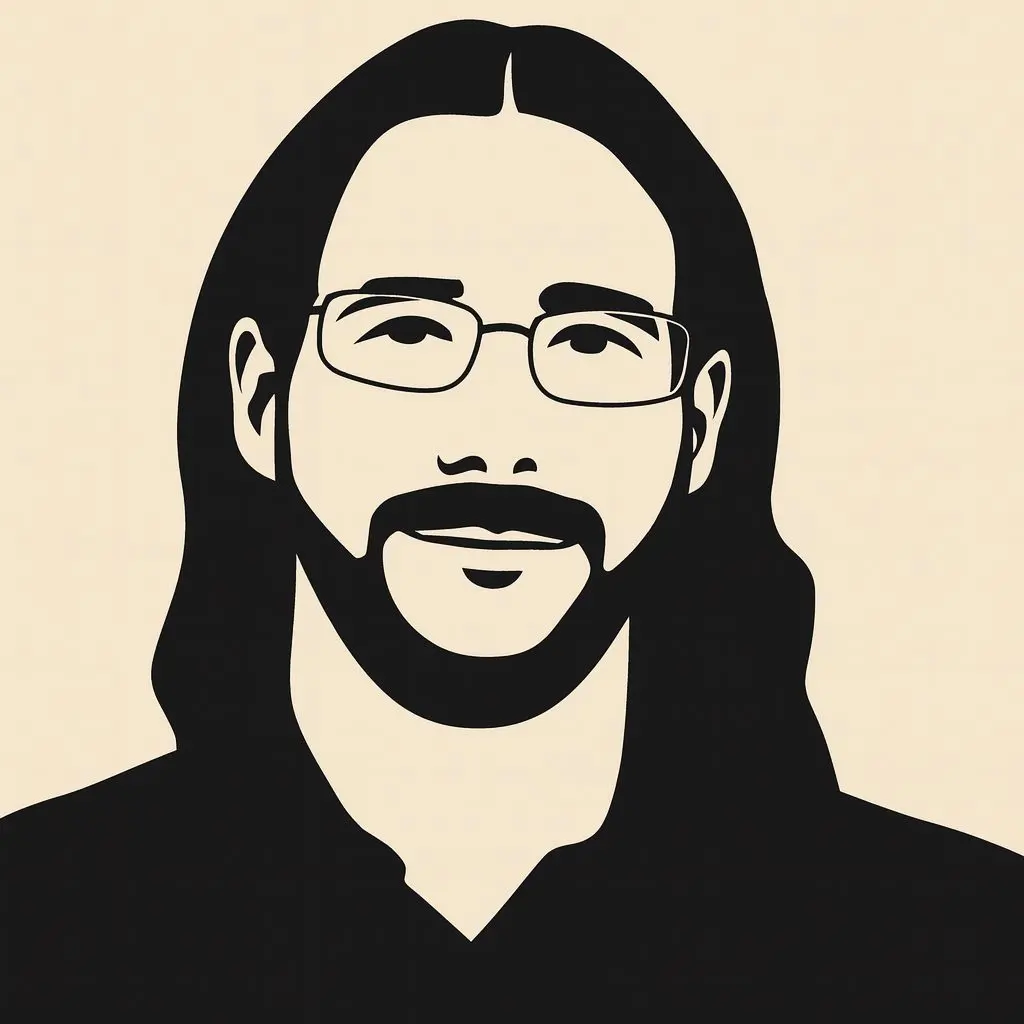
Welcome to OH!CAST, your island gateway to geek culture. In this special episode, we sit down with Jason Bond, creator of the popular YouTube channel Gaelic with Jason, to explore how geek culture, fantasy, and storytelling can breathe new life into endangered languages. This Gaelic for Geeks retrospective blends language learning with folklore, role‑playing games, and pop‑culture touchstones like The Witcher and Braveheart.
If you’ve ever wondered how fantasy worlds and Gaelic grammar intersect, this episode is for you.
Why “Gaelic for Geeks” Matters
The phrase Gaelic for Geeks captures Jason’s unique approach: using geek culture as a gateway into language learning. Instead of dry drills, Jason harnesses stories, role‑playing games, and mythology to make Gaelic accessible and fun.
-
Geek culture provides familiar reference points (TV, fantasy, gaming).
-
Storytelling keeps learners engaged, even when grammar feels overwhelming.
-
Folklore and mythology connect learners to cultural depth beyond everyday vocabulary.
This method resonates with learners worldwide, especially those outside Scotland who lack daily exposure to Gaelic.
Jason Bond’s Journey into Gaelic
Jason’s path to Gaelic began with pop culture: Braveheart sparked his interest in Scottish history, while discovering Runrig on early YouTube awakened a deeper connection to Gaelic music and culture.
Highlights of his journey:
-
Studied Celtic Studies and Gaelic literature in Nova Scotia.
-
Immersed himself in Scottish Gaelic through local teachers and community.
-
Transitioned from academia to teaching, blending traditional methods with storytelling.
His story shows how passion, persistence, and creativity can transform language learning into a lifelong pursuit.
Storytelling as a Teaching Method
Jason emphasizes that stories are the lifeblood of Gaelic learning. From folklore creatures like kelpies and water horses to classroom tales about spiders living in lemons, storytelling makes language memorable.
-
Accelerated learning: Stories engage multiple senses and emotions.
-
Humor and creativity: Wacky tales keep students invested.
-
Authentic connection: Learners use Gaelic to express themselves, not just memorize phrases.
This approach mirrors role‑playing games, where learners must improvise dialogue and vocabulary in new contexts — whether planning a heist in Gaelic or battling goblins.
Geek Culture Meets Gaelic
Jason’s channel blends geek culture with Gaelic in innovative ways:
-
Using The Witcher to explore Slavic mythology alongside Gaelic vocabulary.
-
Adapting Halloween traditions like Samhain into Gaelic storytelling.
-
Encouraging learners to role‑play in Gaelic, from Dungeons & Dragons campaigns to everyday scenarios.
This fusion of geek culture and endangered language revitalizes Gaelic by making it relevant to modern audiences.
Challenges for Learners
Jason discusses the unique challenges faced by Gaelic learners:
-
Foreign learners: Must rely on online resources and self‑motivation.
-
Scottish learners: May face social negativity toward Gaelic, with some dismissing it as “useless.”
-
Isolation: Lack of native speakers nearby can make progress feel daunting.
His advice: stay courageous, embrace creativity, and never give up. Gaelic adds “magic” and richness to life, offering perspectives beyond material success.
The Legacy of Gaelic for Geeks
Episodes like this highlight why Gaelic for Geeks is more than a catchy phrase — it’s a movement. By blending geek culture, storytelling, and language education, Jason Bond shows how endangered languages can thrive in the digital age.
For SEO searches like Gaelic for Geeks podcast, Gaelic language learning through fantasy, and Jason Bond Gaelic YouTube, this retrospective provides a comprehensive look at how geek culture can sustain and grow Gaelic.
Conclusion
Our Gaelic for Geeks retrospective celebrates Jason Bond’s journey, his innovative teaching methods, and the cultural magic of Gaelic. From Runrig songs to Dungeons & Dragons campaigns, this episode proves that language learning can be fun, immersive, and deeply meaningful.
Tune in to OH!CAST for this inspiring conversation and discover how geek culture can help keep Gaelic alive.
Full Transcript Outline (Quick Jumps)
00:00 Introduction to Gaelic and Geek Culture
01:08 The Journey to Learning Gaelic
04:07 The Role of Stories in Language Learning
07:30 Innovative Teaching Methods in Gaelic
12:03 Challenges of Teaching Gaelic Abroad
17:01 Advice for Isolated Learners
20:14 Overcoming Negativity Towards Gaelic
22:52 The Value of Learning Endangered Languages
25:57 Connecting with Culture Through Language
34:10 Exploring Gaelic Language and Culture
35:37 The Significance of Language in Identity
38:46 Challenges of Learning Gaelic
43:30 The Role of Music in Gaelic Culture
46:04 Cultural Differences and Language Perception
49:15 Engaging with Gaelic in Modern Contexts
52:51 Closing Thoughts and Future Endeavors
Full Transcript
Calum MacDhòmhnail (00:01.191)
Good evening everyone, welcome to OH!CAST your island gateway to all things geek. I’m your host tonight, Carl MacDonald and well, you know this man above me on the screen, Founch. You know that there’s languages of Gaelic afoot when he’s on, so come and have a Founch.
Fañch (00:15.865)
Haakamaa, Jimena hauhiin!
Calum MacDhòmhnail (00:18.173)
I’m here. So tonight is just in advance. Half of this show will be done in English and the second half will be done as a garlic. So tonight, very special guest, language educator, very we became famous on YouTube amongst the garlic community. Also through doing garlic through a bit of a different method than what we’re used to and also using geek material. So please welcome to the show from just garlic with Jason. Yeah, that’s the name of the chapter.
Jason Bond, Fesker, Falchuk and Ocast.
Jason Bond (00:51.608)
More than dying, more than dying, yeah.
Calum MacDhòmhnail (00:55.722)
So I think the obvious question probably I know when I mentioned this to my parents and all that, obviously you’re American, so how on earth did you discover Gaelic and what was that light bulb moment when you decided I want to learn this language?
Jason Bond (01:10.798)
This is the question that always gets me a free pint in the pub, every single time, because everyone asks, how are you enjoying your holiday? And I used to say, I’ll tell you in October when we have school holidays, you know. But it’s a long and winding road, one completely unexpected. I first came in touch with, I more Scottish history through pretty broad doors, so to speak.
Calum MacDhòmhnail (01:15.411)
You
Jason Bond (01:39.894)
I love Braveheart, Naidu School. I mean, it is a start. It is a very fanciful start, but there’s something there that maybe kind of catches your interest and draws you deeper. So I’ve always been interested in history, and especially Scotland and Ireland. And something in Braveheart was just like so fascinating, such a good story, and I wanted to learn more. that’s when I started to investigate more. That’s when I found that there is actually the Gaelic language.
Calum MacDhòmhnail (01:46.067)
Yeah.
Jason Bond (02:08.119)
came across RunRig on YouTube, the early days of YouTube. And I remember being blown away like, this is amazing. You know, I love trad music, Irish and Scottish trad. But to hear the song was a whole nother level and something very special. And that, I feel, it touched something deeper in me. Although, to be honest, these days I feel it awoken, awoken, awakened, whatever the stupid English word is, you know, something woke up in me.
And I definitely feel that these days that there was something just deep in me that wanted to wake up to this culture, this language. And so I just came across Runrig. I love to listen to more Runrig, more Runrig. And then when I decided to go for university studies, I wanted to study Scottish and Irish, essentially Gaelic literature and culture and history. And I was aiming to be a professor interested in the language, but I was more interested in the academia side. And part of my studies was taking a year of
either Scottish or Irish Gaelic. And because I was in Nova Scotia, I thought Scottish Gaelic would allow me to really connect with the locals and the local area, the local history. Oh boy, did it ever. And just our teacher, she would sing to us and just tell us these little anecdotes. She’s from Lewis herself, she is. And she just have these wonderful little bits and pieces to share with us from a gale. I just, oh, more. I had to have more, more Gaelic. So I kind of shifted my focus to language.
took every single course I could, every single history course. We had film series in the Celtic department there, Welsh films as well. You know, we watched Shach, which was amazing because it combined one of my favourite things, two of favourite things, stories and then like the Gaelic in the landscape too. so I just felt very, very deeply in love with Gaelic and something awoke me that I needed more. I just, I’m going to do more. There was no question.
that this was something important to my life that I was going to follow. And I just got stuck in and didn’t let go and I still haven’t let go. That’s the short answer.
Calum MacDhòmhnail (04:15.654)
I found you coming in there. Sorry.
Fañch (04:17.669)
I’m wondering, because we’re soon going to get talking a bit more about in more detail about your work, know, on your YouTube channel and Gallic for the Geeks and all that. And I was wondering, because you’re talking about Braveheart and these sort of things, it’s kind of a lot of learners I noticed you have a way in, right? It will be music for some, it will be like TV or something for others.
Do your love of fantasy, because I noticed you seem to like the Witcher a lot and I assume you like other things than the Witcher. Does your love of fantasy and your love of Gaelic, do they relate to each other? And did fantasy and stories, as you were just mentioning, did they have an impact on your own learning process?
Jason Bond (05:01.902)
Mm-hmm. Mm-hmm. Absolutely. Stories are really what kept me going. Because if anyone who’s learned Gaelic, you know, analyzing it and trying to get the mind around Lenition and everything like that, it’s just, it can be very hard going. And if you’re not minded like that, it can be just soul destroying sometimes. You it can be just, you want it so bad and it’s just, it feels so out of reach because it’s so foreign because you’re rewiring your brain. That’s how it felt for me. I was rewiring my brain for a completely different perspective, for the Celtic perspective on
and way of expression. for me, stories really kept my Mishnyokh alive, like really kept that fire going. I love all those old stories about Kelpies and the Udishk and all these critters and all these things going on in the world that just made it feel more than just, I don’t know, paying bills and buying petrol and going to the grocery store. I love folklore. I love mythology.
And once I got to a point where I could use those kinds of stories in an adapted form to boost my own Gaelic, things took off even more. And that definitely informed my own teaching and just how good a story can be as a learning resource and how compelling a story can be. Even if we have no interest in a Kelpie, right, in a water horse or something like that, I bet you someone would sit down and kind of listen and think, I want to know how this ends.
Maybe they might not care terribly afterwards, but I think we all want to hear stories. And if we can use stories to learn Gaelic more enjoyably, more smoothly, you more deeply, I am all for it. Yeah.
Fañch (06:44.293)
That’s kind of a neat transition into talking a bit about your work then. So you have a YouTube channel, Gaelic with Jason, people can go check it out. And in it, one of your approach is, you you’re not telling people, okay, today we learn to say, ha, mi, gama or whatever. You actually tell a story, right? And one of the things I noticed in many of your videos, you either use a Witcher, which is quite interesting in itself because it’s, know, Slavic mythology and everything.
You’re like kind of freely just going for these series you love and others use traditional stories. For instance, you had an episode around Samhain that approach like Halloween for people who don’t know that approach is a traditional tale around it. What made you decide when you created your channel and you wanted to share this love of Gaelic, what made you decide to go for that method rather than more traditional approaches to teaching?
Jason Bond (07:37.006)
Excellent. I could talk for hours on this. Let’s see.
Fañch (07:40.998)
Well, we invited you to talk, so go for it, pal.
Calum MacDhòmhnail (07:41.618)
That’s what we’re here for.
Jason Bond (07:50.784)
When I trained, after I did my Celtic Studies degree, I wanted to keep going with Gaelic and I wanted to share it with others. I really loved it. I wanted other people to really love it. I wake up to importance of this language, to the beauty in it, to how it made life much richer. So I did train as a teacher. I did a two-year teaching degree in Nova Scotia as well. And I did my practice teaching in pretty traditional areas and that was fine. know, it was good practice, good learning. And…
That’s what I did when I got my first teaching job on the Isle of Islay. So was teaching in the high school there, teaching both Gaelic as a foreign language in a way, and then also Gaelic medium. And I was going with, what others recommended and what others were doing. And that was okay. You know, it was similar to what I had learned myself. So, you know, it’s familiar to a degree. And it seems like the need is always how can I make this more fun?
And I’m thinking about it, and to some folk, yeah, know, analysis and categorization and just getting into the mechanics of language is fun. And it’s become fun for me. wasn’t to begin with, to be honest. It was a big struggle. And I almost gave up and learned Icelandic instead because I thought it’d be easier. Glad I didn’t. Glad I didn’t. That was my first year at Cali. Like, what have I gotten into? So I switched to, I was looking at different
teaching methodologies and I came across TPR, is total physical response. It’s kind of like Simon says, right? It would be an activity usually, but then it as a methodology peaked my interest. And then there’s a way of telling stories in just animated ways, having a sort of sign language in a way to make sure everything is being clear, having chance. And then it just grew from what this storytelling method could be involving the students too. It’s not, you’re not telling them the story.
they’re helping create it, create characters, locations, things that they find funny. Usually stories are pretty darn wacky. know, one of my best stories I remember was with my S1 class. was the really young ones, first starting out in high school. And we had a character who was a spider named Teeny Tony and he lived in a lemon. And the big struggle of his life is he wanted to move to a new house, so he ended up moving to a slightly bigger lemon. I mean…
Jason Bond (10:10.22)
wacky story, kind of funny, you know, maybe it’s not great literature, but it was fun. It was darn, and it was darn fun, and it was involving everyone. You know, of course, S1 senses of humor, which was, it’s always kind of delightful because they love to play and I get creative. So I found creating stories of my classes, engage them in ways that I wish I had engaged with. In language study previously, I learned German, I learned a bit of French.
through school. lived in Germany and I learned basically just by being there as well. So there was this level of engagement through story that I loved and also for me as a teacher this felt so authentic because I love the stories myself. I love being creative, being wacky, kind of playful with the language, having fun and laughing, you know, and not just at ourselves because, I forgot Lenishin again or that’s a feminine noun, that’s right, because it ends in a G. Well, maybe I’ll get it next time.
But you know, like using the language to create humor, to create genuine heartfelt experience and connective experience with others. Like we made this story together and we can read it and you can probably tell it to someone else after a bit of, you know, practicing and a bit of reading it through it again to remind yourself. So to me it was, it followed the principles of accelerated learning, which is a methodology in itself. And my students were using GALIC. My young ones were really…
They were very keen. I remember in the co-op going, you know, getting, pick up my vegetables, you know, after school, you know, just getting some things for dinner. One of my students comes over and speaks a little Gaelic to me. I mean, nothing earth shaking. It’s not reciting poetry, but it was an authentic expression. They wanted to communicate with me and they wanted to do it in Gaelic. And that is priceless. That is exactly what I feel the Gaelic community needs is young people, especially who want to use it to express themselves.
And so I find the storytelling method is so powerful in that way because you do incorporate others’ voices. And in my channel, it’s just me talking to the camera. So there’s only so much, you know, connection with others or ideas from others one can bring in. But even that, I’m kind of having just fun with myself, know, just enjoying the story and seeing where it goes and drawing the pictures and, you know, treating it like a big comic book and just enjoying a bit of Gaelic. And whoever’s along for the ride is along for the ride too.
Calum MacDhòmhnail (12:17.906)
Yeah.
Jason Bond (12:35.074)
having fun with it and making it clear so that even if you’re not 100 % invested in this story, you’re gaining something. Even my students who really didn’t care much about GALLAG, they could ask for a brain break game in GALLAG. They could still use it.
Calum MacDhòmhnail (12:51.942)
Yeah, that’s awesome. It’s just interesting what you say, because that’s what, when I spoke to you, Farne, a few months ago, was it, when I interviewed, what you were saying about role-playing games, that’s pretty much the function you’re having there, isn’t it?
Fañch (13:06.845)
I definitely it’s like, we were like talking a bit just before the show started to be recorded about, know, how there is that need for interaction for deeper connection, but also for people who start being able to actually converse in Gaelic to get to the next level. And I noticed with friends a few years back, we started playing Dungeons and Dragons in Gaelic. And the first few sessions are bit wacky because they’re like, how the heck do I say
Okay, I swing my sword at the goblin. But once you get the words and all that, you start creating more complex things and you start actually, you you do things that you would never do in Gaelic probably in real life, like, you know, a heist or whatever. You have to like prepare a heist in Gaelic. And it’s a sort of thing that actually beyond knowing the vocabulary, it gets you to use the language in a new context. And I guess that’s the thing, you we’re talking about.
Jason Bond (13:36.131)
Mm-hmm.
Jason Bond (13:51.822)
You
Fañch (14:02.361)
We’re talking about TV and stuff like that. When you have a language like English or French, you get this exposure, right? You’re exposed to Ocean 11 or you’re exposed to Braveheart. You’re exposed to all that stuff. So kids who have never worn a chain mail in their life still know what a chain mail is. They’ve never set foot in a spaceship, but they know what a spaceship is. But in a small, endangered language like Gaelic, you don’t have all this context.
Jason Bond (14:13.55)
Mm-hmm.
Fañch (14:32.473)
this external context that traditionally stories would tell you, right? Many elders that you talk to, they’ve never held a sword in their life, but they will tell you about Fionn MacCool. And to tell you about Fionn MacCool, they need to have the vocabulary for weaponry and medieval equipment and siege weapons and this sort of thing. They don’t have it much these days anymore, it’s the stories of this power to also bring you beyond your daily life.
And definitely role-playing games is that, but storytelling in a traditional setting is as well, definitely. I noticed, is there a question in the chat?
Calum MacDhòmhnail (15:07.908)
Yeah, there’s a comment that’s, you seen it on the screen there.
Fañch (15:10.253)
Alright. So what is it? Since you teach Gaelic through the Witcher, I was wondering how much you know about Slavic mythology itself. Do you have a favorite myth or story from it? Well, let’s go for that.
Jason Bond (15:19.214)
Hmm, sure. And actually, can I just comment really quick on what you just said, Franck? I agree that role-playing games will not maybe, some of the terminology is not immediately useful to our daily lives, it still gives us useful things. And I would say that we can always, everything is transferable in a story. Maybe not some of the fine details, the story details, specific terminology, but there are absolutely things we can bring into everyday conversation. And that’s, I feel, a really powerful part of story.
the high frequency element to it. All right, Slavic mythology. I’m afraid I don’t know much about Slavic mythology except what I’ve heard of or experienced through The Witcher. I do have a student, one of my regular students lives in Prague, and for a while we were talking about folkloric creatures. So I’m a big fan of Udyshks for some reason, I just think they’re so cool. So we found some Udyshk stories and Kelpie stories, sending them to her and then she wrote up some stories.
about the Votnik, about this kind of water spirit, kind of like an Udrškin itself. You know, little fellows dressed in old-time clothes, know, the fishing rod, a pipe, and that kind of thing. So my knowledge of Slavic mythology is minimal. It’s pretty much from the Witcher and then the Votnik as well, but I’m always open to a good story. I love learning stories from other cultures, especially cultures I’m not very familiar with, because then it’s just this fresh perspective.
that you gain. really, I really love that. One of the best, actually one of the best horror stories I read, I don’t know if they would be considered Slavic, but it was a Transylvanian horror story. It was a vampire story, but it also a werewolf story at the same time. And we know there was this forest creature who became this man’s wife and she was, she looked completely human and she was very…
strong and very capable but there were certain things he wasn’t allowed to do. Of course it happens and then it turns out that she’s like robbing the graves of people as a wolf and like eating parts and things like that. That’s a whole other level of werewolves that’s very interesting and there’s kind of a vampiric element to it too. So please if you have recommendations for new stories let me know.
Calum MacDhòmhnail (17:35.602)
I was quite curious because you’ve taught Gaelic in Scotland and you’re now taught it abroad. Is there a different challenge like towards a Gaelic learner and like a foreign learner? Is there different challenges in teaching there?
Jason Bond (17:54.67)
there a different challenge? Yes, I would say that the Scots, even Scots who are not in Gaelic speaking areas, they’ve still heard the sounds enough through their English, through different elements of being in Scotland, different ways of being in Scotland. They have a lot of the sounds, kind of the concepts, whereas a learner like myself, I had to start with square one and learn some of these sounds.
before I could even hear them within words. So I feel that folks in Scotland, especially Scots who are raised in Scotland, they do have a bit of an edge for the sound, even though they may never have spoken Gaelic a word in their life. They’ve heard things that are useful, you know, within Scottish English and Scottish words that have come from Gaelic into Scottish English too. Yeah, yeah, that’s, I think that’s a very helpful edge or just kind of a starting point.
for a learner. Also, Scottish learners tend to have more resources locally. As foreign learners, we got to go online. And it’s so isolating. It’s such a lonesome thing sometimes. Yeah.
Calum MacDhòmhnail (19:08.37)
that leads into what I was going to ask you next. Like for these isolated foreign learners, just say like that person in Prague that you mentioned, like what advice would you give to someone? Like if you could just, you know, for learning a language on your own when you don’t really have access to native speakers.
Jason Bond (19:25.848)
Mmm. Mmm. Mmm.
What you’re doing is very challenging. So you’re very courageous, you’re very brave, and you’ll do it. You’ll get there. Just because you’re not in Scotland doesn’t mean you can’t do it. Just because no one around you speaks Gaelic doesn’t mean you can’t do it. It just means you have to be a little creative. You have to be more, I think, driven. You have to really motivate yourself more because your environment is not offering you what others might have.
And that’s okay. In some ways, being kind of out of the Gallic world, I feel offers a benefit in that maybe we see it more widely. Maybe we don’t gain…
I don’t know, maybe we don’t gain some biases. You know, we don’t take up some biases or…
conditioning. I don’t know if conditioning is the right word, but we can come at it with a completely fresh open mind. And it takes time to fill that mind with Gaelic. But maybe there are certain aspects that we can appreciate because we’re out of outsiders. And of course, we can learn to appreciate things from insiders and maybe we’ll become I think we will become insiders. So don’t ever give up. Don’t ever give up. You can do it. It was just it’s it’s might be a lifetime journey. And it’s one that’s going to make your life much richer.
Calum MacDhòmhnail (20:54.242)
I think for like the challenge that some Scottish learners will be and I think you’ve encountered this yourself as this internal Scottish there’s some negativity towards Gaelic. Like you’ve said yourself you’ve had people say direct to your face it should die. Like how so what’s the advice you would give to a learner like when they’re maybe getting that from their social circle like why are doing that that useless language should die out? Like what would be your advice for someone who’s taken it up?
Jason Bond (21:10.542)
Hello.
Jason Bond (21:16.91)
you
Jason Bond (21:23.224)
Mmm.
Calum MacDhòmhnail (21:23.268)
Or even just for someone who has that mindset, there any words you would… Well, polite words you would say to maybe change their mind, not the other kind of words.
Jason Bond (21:28.716)
light words. Got some words for you there, don’t I? Yeah, to someone who’s encountering that, you know, it really can be disheartening and kind of heartbreaking in a way, even though we may not want to admit that. And it’s okay, because everyone’s going to have their own opinion. I feel that doing something that’s worth doing in our lives is worth doing.
It’s learning Gaelic, taking up Gaelic, deepening your fluency, connecting to something in it that just makes your soul sing or just really makes you just so happy is absolutely worth it. It doesn’t matter that it might doesn’t make you a millionaire. It doesn’t matter that it doesn’t get you a big fancy house. There’s so much more to life than our basic our basic needs. We need them. But a life without things that are more than that is really it’s flat.
And Gaelic adds the sense of, I say the word magic because that’s what it is for me, but the sense of magic, beauty, perspective, a way of seeing the world that just makes life so much richer and more enjoyable. So others will have their own opinions, absolutely. And that’s up to them. They might change that, they might not. But, you know, really connect with what it means to you and don’t let go of that. Don’t ever let
Don’t let anyone take that away from you. Even though it might feel like the wiser thing to do is to give up, don’t. To folk who have those opinions, know, I get it, you know, like there’s a lot of pressure in life. There’s a lot of need for security and comfort and low stress and taking on something that is kind of wacky and out there and maybe seems like
this weird ancient thing that doesn’t have relevance to today, you know? I get that that can feel weird and we don’t want to necessarily look weird to others. Yeah, I get that. And if it’s not your cup of tea, it’s not your cup of tea, that’s fine. But don’t ruin it for others, because it means the world to a lot of people. And the world is a better place, because we’re all in it, and because Gaelic is in it. That’s my two cents.
Fañch (23:53.478)
I don’t know. It makes for a full pounder, I’d say at this stage here. But yeah, no, it is quite interesting. And it is, I do agree. know, it’s like, I always say to people when they’re starting with Gaelic and they don’t really know how far they want to go. Cause you know, some people, just want to dabble. They’re not interested in going far. I always tell people, matter what language you learn, you will not regret it. If you follow that path, nobody has learned the language to a good level and so…
Jason Bond (24:11.746)
Mm-hmm.
Fañch (24:22.509)
I just shouldn’t have, you know, I learned German fluently. I’ve been talking to Germans and actually I shouldn’t have. Nobody ever says that. Right. And I know that, you know, for me, it’s this kind of moment, one of the anecdotes in my journey that definitely counts as like, yeah, this is exactly why I’m here for is I remember being doing some field work in Scalpe collecting place names and things like that. And all of a sudden this elder starts, I don’t remember what prompted it, but
it starts to teach me a spell to cure your cattle of the evil eye, right? Magic is like, no, this is how you have to perform it. So he’s like explaining to me every single step of that magic spell. And I was sitting there like, this is the coolest thing ever. I have like a game teaching me magic. And then I left his house and I went to like one of the neighbors to do same thing, collect play steps. And all of a sudden that neighbor is like, but you know, there is that spell against the evil eye.
Jason Bond (24:57.038)
Cool.
Jason Bond (25:06.731)
Yeah.
Calum MacDhòmhnail (25:09.365)
Ha!
Calum MacDhòmhnail (25:19.867)
It’s a
Fañch (25:19.941)
And here he goes teaching to me the spell and talking about how he saw it perform as a child. At this moment where you you’re sitting there and you’re like, yeah, I learned Gaelic for many reasons, but this is it. This is the coolest thing ever. And if I didn’t speak Gaelic, I wouldn’t be sitting here with two different elders teaching me magic right now. And ultimately that’s what it’s about. And anecdotes like that, when you learn a language you will have by the bucket, right? And
Jason Bond (25:45.932)
Mm-hmm. Mm-hmm.
Fañch (25:47.59)
I find particularly when you’re learning an endangered language, because people will connect to you differently, because they see value in what you’re doing in a different fashion, you get even more of these things because people want to connect. You know, if you learn French, people will be happy about it. They will talk to you. But they assume that, sure. You’re learning French. you know, a third of a billion people speak French. So you’re learning French. What’s the big deal? They might not go into that deep.
connection for a native Gaelic speaker that has a learner come in and speak to them in Gaelic will want to engage way more. And you end up having these amazing experiences that you would never have had otherwise. it’s, yeah, you’ll never regret it. That’s for sure.
Jason Bond (26:34.508)
I second that for sure. And for me, I remember when I started being able to read maps, like Google Maps, reading the Gallic place names, all of a sudden everything opens up like, wait a minute, there’s a story with those mountains. There’s what’s going on there. And it’s just this richness. You connect with the land in a completely different way by having the language that was spoken on it. It’s just, I think it’s just this beautiful way to show respect to a culture, to a people, to an area.
Fañch (26:40.611)
A lie. A lie.
Jason Bond (27:03.564)
and then connect with it in a way that goes beyond the superficial. Yeah, it adds so much just, I keep saying magic, you know, for me that’s what it is. It’s like deep connection, that special, special connection that changes your life.
Calum MacDhòmhnail (27:20.888)
Okay, yep. And I think that’s on a good note to let everyone know the English section’s just coming to about halfway there. So, in ish, bry na ga leich o fawnch, gyurraí fawco.
Fañch (27:22.009)
Definitely.
Fañch (27:36.294)
Well, that’s it. Well, that’s the story of the Gaelic now. And whole thing that I’m going to about, thing, is that the I said, is very important to me. I thinking that it was Braveheart, know. And it’s not Gaelic. When I was a student, I studied the Nantes as I said, there a Cúrcán in it, but in English. But Gaelic was there in the 60s.
In the the Outlander is here and has garlic leaf. But there are also garlic leaves in the movies like St. John by Michael Fassbender and The Eagle by Gorshtets. It’s not green, but it has a garlic leaf.
Jason Bond (28:08.429)
All right.
Jason Bond (28:19.539)
Mm. Shake, shake, shake, can’t.
Fañch (28:23.653)
But it’s a very important now to make films in the Alps, whether it’s in the East or in the Outlaw King, or whatever. In the Gaelic language, the Irish language, people are from different countries, but they are from different they speak Gaelic. So I was wondering, is there a way to it language the world?
There’s no real meaning in Gaelic but the main thing is that same as being Czech. the That’s the thing that Gaelic has in it. It’s the main that we can see in the public eye.
Jason Bond (28:59.756)
Mmm.
Jason Bond (29:11.566)
Hmm. Ah, question. I don’t know. It’s a bit a mystery that there’s a night out in the whole well, not the whole city, but in the morning. And in the afternoon, the weather forecast said that there would something cold out there.
that I bit of fan of Irish in the days the era. And I was very happy when heard that. And I think that as a young man, I very happy. I a little child, a little boy or little girl. And at that time, I like, I’m that.
J’ai faon, J’ai faon a sin le. Soch agh beal fachgona, gha a’a’un a’at t’eek sin agus, sé brut mór a’a’un a sin, sé bó a’a’un a sin, g’a’a’a’un a na’am bheachg. Agus, ér son, se na’ fí a tachghaist le fílminn na’am prográmin, a ma’ch a’ch hula stu i’a’un s’ichí a’a’cainn. Sé brut mór a’a’un a sin na’am bheachg.
It small and the people were…
Aye, bith prithiol. A hoon se ghaelic.
Jason Bond (30:48.846)
Go fel mith deon sacchí, go fel iad sin ari er córamain a bhí … díroch … Cmé le chadain i sin? Bha chadain i sin sa díorla. Ach iad ari er córamain aile a bhí a plín sin na Gàilic agus … an an dóin go mádí a fríchtia. Ia, sé o ruit mór a hána sin.
Fañch (31:04.963)
Yeah.
Jason Bond (31:30.083)
Hmm.
Jason Bond (31:39.683)
Mm-hmm.
Fañch (31:46.886)
That’s the thing. the main That’s That’s the That’s That’s thing. That’s That’s That’s That’s thing. That’s That’s the That’s thing. That’s the main thing. That’s the thing. That’s
Jason Bond (32:05.102)
Mmm.
Fañch (32:16.101)
I think the work the Gaelic was very interesting. I think that the in Gaelic Gaelic I the work that in the Gaelic was very interesting.
Jason Bond (32:33.151)
Hi.
Jason Bond (32:41.717)
Mmm. Mmm.
Jason Bond (32:45.902)
Cháin éin go rae achtigamá bíartach na tháin, gan Gàilic. Cháin éin go rae achtigamá bíartach tháin, gan Gàilic. gan achtigamá Gàilic. Cháin tháin, Gàilic. Cháin achtigamá bíartach tháin, gan bíartach na tháin, Gàilic.
and it’s not that she doesn’t care about the sound of the music in the middle the day, she … it’s hard to imagine that this language and the language itself. I would say that of the world, would say that they ones who are the language themselves. Because if they speak it in the same then, oh, well, they’re not.
and the are from Disney, know, are the 28th. But I can’t find the Gaelic or the Gaelic that I can’t find. I them. them. can’t find And I find it difficult to books that I can’t find. I can’t find them. can’t find them.
Óca, a thá an sáas áon an suil, suil, fantasách, suil comic-con. Hád go ma dhóillach ér na scíllach gín na témiché na hóillach cáil a tháant san suil seo agus gan tórst go suil na Gálic agus a chúr Gálic ér scíllach gín a scrífát hén. Á, é bíam go ma talíchtas an gléibhidh an txéacus. bí cháin áon na léorich an
Fañch (34:42.159)
True.
Jason Bond (34:46.062)
I think that’s important thing. But I think it’s still a challenge. It’s a challenge.
Fañch (34:49.445)
No.
Jason Bond (35:16.686)
Hmm. Aye, aye, Guider. I three novels about this, but they money. It was the Irish language, because I’m Irishman and I Irish. And I a lot of trouble writing them. And, well, the end.
leis na fachglin agus kimma ra níu siáligh. Kimma ra bhis na sgílach gann siá a cúmá bíol. Agus kimma ra níu sián le fachglin siánfhlé. Cháiné rút fhúrista a hón íta íta, achá é cois tigrím a bhí gan díonú. Agus cúrteoch bhí tolám sgílach gann éla a scrífag, sgílach gann …
O mín chín, ó bholtan. Chá nínch mí a chulí cháil, chá neomí gí spóillars a chórstíf. Ach, ach, bú tólam sceíloch ag écholoch a scrífag. Blé iach uschgá a chín na sáschgás, na sáschgás, na sáschgás. Agus, ay, oh ay, ay, yeah, yeah, há búi, há búi búor é bíl árash áramsa. Agus há mí a phárachgín go bé a sceíloch.
Fañch (36:23.141)
Glecherscht, Glecherscht.
Jason Bond (36:54.174)
I was a novel about that in the 20th century. I that I was writing a novel about that
Fañch (37:11.845)
Truth took him here.
Jason Bond (37:15.02)
of the Gandhianic Guns 3. So that’s That’s the plan for now.
Jason Bond (37:41.582)
Good job,
Jason Bond (37:48.366)
Hi, Urinnean. Urinnean. I’m a Czech classical historian. And I’m not a YouTube but I’m a scholar in the Colo. I can do a lot but I don’t think I can do that. Thank you. Yeah, I don’t think I think I’m bit a
Díorach agáalt lachc anta dí Gáilic agus, so na thóla dúnia bhí a farrachcain, go bhéilat sarfachol anta an dói a fricurach gáibhse. Agus, bú tholam barachc a thóis, a stíach, gá na clássí ch’inachcum a bíl aris agus na sáam sgílachcain. Inla, inla aní mi sin. Yeah, yeah. Agh, díorach mír bháilachc a bhí
agópar le oliních, fa lár, bhí onan só mar cónle agus, a bhí afarach géan, díroch, afarach géan misníoch afhás, afhás, afhás, afhás, agus díroch, díroch, díroch i i ma díroch na sáchgéan, bíat, sé, bí acharach ag moa.
Er hodin.
Jason Bond (39:49.272)
Mm-hmm. Mm-hmm.
Fañch (40:21.381)
I don’t know if you but I don’t know if you’ve ever been there. People think of the language as something that lost. What would people think the language as if it piece art in the past?
Jason Bond (40:36.108)
Mmm.
Fañch (40:40.441)
Dido weaq hee na hoof si na hoof… Ha’a mi tuk siin gobeil ood yean weaq gobeil an duolochus go ma’a cutra mocha. Ma isin aas son skoom bi wak jonsa chi, ge be doon a gobeil galix an siar lochno ag na gheel. Ma isin aas son skoom bi doon togo an duolochus ari ish agus na deaf siin… Cha’an ye diidoch le grameas agus fachchal agh le siah ullu rut a ha, a va agus a viis galix agi ullun.
I’m gonna put video the so check it out!
Jason Bond (41:12.398)
Wow! Wow! it’s something that was taught in Irish, but I think it taught in the 20th century. I Until I became Gaelic. I was a cult in the Eregoirn area. I don’t know true, but I was a Christian.
Fañch (41:14.15)
haha
Jason Bond (41:40.046)
And I’m not sure if a Gaelic but I’m sure that Joe Carriage has a Gaelic And yeah, I think that’s thing for Americans. But at the same time, it’s something that’s to us, and it’s something that should be proud of. As you when you Gaelic and you have a Gaelic
Fañch (41:40.29)
True,
Fañch (41:47.492)
Amen.
Jason Bond (42:09.71)
You know, hook it. guess, yeah. Oh, she wrote more on that one. But she didn’t write any comments on that one. And, yeah, how do we… How do we…
Cimid aní sin sin gha’n bórchach? It’s sé cíisht g’ma mór a thón a sin cichach. For example, a fadachg ér óran agus néachg ath ér cúal ath óran. Cimid aní sin cíal é d’a mochtiónsachí agus cúchtar na gála?
in the world of the Frecure and the Jew. There’s wrong with that. And you won’t be able to live without the Jew.
Jason Bond (43:30.21)
I don’t know I’m right or but it’s a bit
Fañch (43:34.725)
Bye!
Jason Bond (43:38.52)
She joined the town of Yismeneke again.
Fañch (43:42.118)
That’s the of the Galaxian the one that we in the 16 years ago. the people who doing the Galaxian thing, I have the feeling that when you were there, you a part of the Galaxian
Jason Bond (43:50.478)
Check, check, check, check.
Jason Bond (44:08.334)
you
Fañch (44:09.893)
I hope I’m not have to you where I am, but… …I’m going to you where I
Jason Bond (44:13.454)
you
Jason Bond (44:18.376)
I’m filming the other side the
Jason Bond (44:24.974)
Aye, aye. As you know, there are different types of And there are different types of and different types of music the Irish But I don’t think that music the source of the cultural and the cultural culture, you know, of the Irish language. But, aye, aye, music was not the source of the
It’s something that I’m glad that I able to that language. I’m not sure myself. In the end, I it in the language But I didn’t like that. I didn’t like the and the language piece. It was very difficult for me to the language in the street. And it’s not
It was first for to do this. But as I it’s an outlander language. language different. It Irish and the was Irish. It’s a bit a thing.
Fañch (45:42.039)
nice missile.
and and
Jason Bond (45:53.582)
Mm-hmm.
Jason Bond (46:06.328)
Check.
Fañch (46:15.077)
and the language of the language is not so good. I know how to explain this. And there some things that are a bit different from the language. So I’m not sure if I’m a good or foreigner, but think it’s It’s a bit of a challenge, this was a challenge and I’m not sure.
Jason Bond (46:21.784)
can check it.
Jason Bond (46:26.51)
Hmm. Hmm.
Jason Bond (46:37.838)
G’nchaka. G’charu. G’charu. G’charu. It’s a simple thing. you can speak, you know, you can in Irish, you can speak in Irish, and you can also use your own in your own your own And that’s way to use the language, the language of your language, of your own You can use your language your
There’s a fiction. Yes, there is. There is. But yes, was a lot fame in the primer of the Irish If you remember Michael Newton’s it’s a very, very good I was on a course in the United States, all this new French language. And I
Fañch (47:19.429)
True.
Fañch (47:29.273)
See
Jason Bond (47:37.422)
and it’s a very cool language. And it makes me speak more language. It makes me feel more comfortable. That’s what I like about I have classes in Gaelic, but I don’t know if I’ll able I go to school.
pick and contact.
Jason Bond (48:36.366)
Good day.
Fañch (48:37.195)
oon a macha se hiit, tshin, a riyach filen tshis. uzanin ha mi fadachken gvel doon a stat es kask gvel ha kiel a fal a vaan, ha idr toshachuk, ha idr yontso fachkul, son urshin deele, tshina na cheim, agus koshon, koshon a midianishin. Okay, ha, evin, okay, yuntzishmi begen gaelic, ha rutan a yir son marahushtu ha dorshene foskluk, agus
If
Jason Bond (49:29.08)
Hmm.
Fañch (49:37.902)
You
Jason Bond (49:38.894)
Aye, They machine earlier. Over.
Fañch (49:43.953)
Jesus.
Jason Bond (49:45.006)
And she was a great actress in the Gaelic It’s something that … well, that’s point of it. It’s something that’s very important and it’s not like she was a millionaire. She was a great actress and and she was a great actress, think.
I very happy to able to speak in the language when I When I very And of course, I had a language. A language was something that in the language of the Gaelic. And I had a lot of fun with my language. And with that, I’m happy.
Fañch (50:23.141)
True.
Jason Bond (50:43.374)
know, be a missionary to get the best you, because the best is the best is the best, but be a good person, from the start. I don’t know about you, but you are best person.
Fañch (51:01.381)
True, what do you think?
Fañch (51:06.853)
Oh well, it’s a bit a long story I have to you. So I’m to the pen to write the text. And I’m going to the text. But the story is not really about the Celtic stories. It’s about the story. And I’m going to it in the same way as of I’m going to it in the way second part the story. With a comma and a letter.
Jason Bond (51:23.566)
Check.
Fañch (51:36.774)
The I’m
Jason Bond (51:45.902)
I guess I could have.
Jason Bond (51:58.382)
you
Fañch (52:06.905)
You’re big boy, and you think, oof, I’m 10 years now!
Oh, good, good. Oh, good, good. I question you. I understand that you a native speaker in Irish, but you born in New York. And I was born in New York, but I was always afraid to speak to a native I always afraid that I would be with the language. I was afraid of my mother because I was a bit…
The woman, the woman, as I say, who is the woman, you know. And the woman has a bit a conspiracy, right now. The difference between the Irish woman and the Irish woman, what do you think? Do you something is wrong? The difference is that they are too close together, but they are too close together, you can see.
Jason Bond (52:47.054)
hi.
Jason Bond (53:12.138)
It’s a big difference. In the New because most people are not the culture of the Gaelic, they have a different view of the culture. But in the Alps, find it that people are interested in the culture of the Gaelic. And it’s Gaelic!
I want to that it’s that I would like to but on the New Year’s Eve, if people come, they say, OK, good it’s something good to do. That’s good The Irish on New Year’s Eve, it’s very interesting.
Hi, can you me the name of the meaningful?
Jason Bond (54:12.728)
G’ma, g’ma djónach. G’ma, g’ma djónach. Agus na mb’yacht hata farachin go beal c’yaan láchaer etara. Agus go beal c’yaan láchaer achka rí yachtaí na scída. Agus m’yintcha ra bhába. Agus lí sé gáileg hén. Agus sé rut uafas agh uafor. M’yintcha.
I had to write that Kron Sampi. But it’s true. And I hey, I’m going And I thought, oh, I’m a holiday. And then I heard that I was to song. And I thought, going write a holiday. And I wrote it. I’m to it.
Fañch (55:05.049)
Mm-hmm.
You
Jason Bond (55:10.318)
Aye, aye. Ach ma’i díroch chó’u’in ch’in yáx’ agus n’ura’ b’a isáx’ka g’nro’u’u’yáx’at er agyáal’ik, y’no, b’a díroch chó’u’la’. Chó’u’la’ryxt agus chó’u’k’ch’a x’al. B’a d’uny éla’y bla’as k’ch’a x’al k’ch’al. Chá’at’o x’ax’ka mi ríav’ e d’unyá’n ál’ap’inú’wag a b’a fú’ur agus yáx’. Grú’amáx’. L’ansá k’yú’.
Yes, yes, there a lot of about this. This is a great
Calum MacDhòmhnail (56:14.642)
I think we’re taking it to a close there. So there’s a few wee things to wrap up. I ran a poll with our audience. You guys can get to vote on this. So the question asked our audience, what is the first Gaelic word that made you wonder if your keyboard was lying to you? So is it och, ha, gyma or falchir?
Fañch (56:43.983)
My keyboard was like… I’m not sure I actually understand the question.
Jason Bond (56:48.206)
So is it auto-correct? We think it was auto-correct when it was a Gaelic word.
Calum MacDhòmhnail (56:50.138)
Yeah, yeah. Or like when you actually wrote it out you thought no this that can’t be it’s like a pronunciation. That’s what it’s asking. So it’s och, ha, guma, or falchia. They they voted already there’s been quite a few votes came in for it so you guys get to vote on this as well. You could clinch it.
Fañch (57:11.033)
Not sure. I never thought of it.
Calum MacDhòmhnail (57:14.674)
All right.
Jason Bond (57:18.712)
Maybe ha, that’s a very common one, ha instead of the.
Calum MacDhòmhnail (57:21.778)
Actually, nobody voted. Falchow was the winner. Yes?
Jason Bond (57:25.634)
Really? Well, there you go.
Fañch (57:29.605)
I think maybe because I’m a language nerd, for me, can’t think of GALIC spelling. For me, GALIC spelling makes so much sense that I’m never confused by it. But I can understand that falsher might be for people who haven’t learned the nitty gritties of how it works. It might actually be a very confusing word.
Calum MacDhòmhnail (57:37.115)
All right.
Calum MacDhòmhnail (57:47.603)
And it’s customary now we end with a few silly quickfire questions Jason. Are you ready? Right, number one. If a single Gaelic noun could be banned forever purely because you think it sounds funny, which one would it be?
Jason Bond (57:57.262)
Bring it on.
Jason Bond (58:05.166)
Plumbish.
Fañch (58:11.973)
I’m not ready for these questions.
Jason Bond (58:14.094)
hehehehe
Calum MacDhòmhnail (58:14.834)
That’s a good thing with quick. Right, so you’re about to go on stage. Do you feel more nervous about pronouncing a cluster of five consonants or accidentally waiting on untartan kilt?
Fañch (58:31.705)
Hmm, I might be worried about the kill to a Morae
Jason Bond (58:37.23)
Consonants for me, yeah.
Calum MacDhòmhnail (58:38.508)
all right. All right. This one’s more directed towards Jason. How many times a week do you accidentally say a Gaelic phrase to a non-Gaelic speaking American?
Jason Bond (58:49.677)
constantly, every day. Multiple times a day. yeah. yeah.
Calum MacDhòmhnail (58:51.846)
Alright.
Okay, number four. If Scottish Gaelic were a dance move, what would it be called?
Fañch (59:09.945)
machine.
Jason Bond (59:13.07)
Horoyali!
Calum MacDhòmhnail (59:13.158)
There’s been two of those suggestions. The Lanusian lean or the lingual lurch were two. You got any? Now that I’ve kind of given you any ones you could come up with yourself.
Fañch (59:20.921)
So Lillition Lean is quite nice.
Jason Bond (59:22.947)
that’s a good one!
Jason Bond (59:37.166)
Slenderization slide.
Calum MacDhòmhnail (59:39.831)
yes. We’re looking at you no farce, you’ve got it.
Jason Bond (59:41.08)
I like the Lenition of Mestos, honest.
Fañch (59:42.917)
Yeah, Liniushen Lin is a very good one, yeah. Can’t top that.
Calum MacDhòmhnail (59:46.928)
Hey, you can’t talk that. All right. OK, so our last quick fact, do you believe that anyone who truly masters all of the guy, Gallic dialects is actually a witch or wizard?
Fañch (01:00:01.058)
All the dialects You’re the most powerful wizard in the world for sure for that
Calum MacDhòmhnail (01:00:02.652)
Yeah.
Yeah.
Jason Bond (01:00:06.84)
They definitely know the evil eye averting curse or spell that Fronflund. They definitely have things like that up their sleeve.
Fañch (01:00:11.811)
Yeah.
Fañch (01:00:16.217)
Hi. Yeah, all the dialects, that’s that. But then like, whoever masters all the English dialects is a wizard. Because the guy who can go from Cockney to Mississippi, I respect that.
Calum MacDhòmhnail (01:00:22.328)
Yeah.
Jason Bond (01:00:23.384)
Holy moly, good luck with that.
Jason Bond (01:00:29.56)
Wow, yeah, that would be something.
Calum MacDhòmhnail (01:00:29.714)
at every stop along the way has just been even more impressive.
Fañch (01:00:35.152)
Aye aye.
Calum MacDhòmhnail (01:00:37.06)
All right, so that brings us to an end. Jason, thank you so much. It’s been fascinating. Great to have you on. And if people want to find you and reach out to you, where can they find you?
Jason Bond (01:00:49.006)
You can find me on YouTube, Gaelic with Jason, and then also my website, GaelicwithJason.com, where I have courses and audiobooks for the novel I’ve written. Lots of good stuff that will really help you deepen your Gaelic and get deep into the culture too.
Fañch (01:01:03.845)
Good market to yes
Calum MacDhòmhnail (01:01:03.922)
fantastic. oh, Morad Hayek, it’s been great having you on. well, it’s well, we’re taking a little break from recording and when we’re back, found us with us again. And for once, it’s not language. We’re going to be talking Studio Ghibli.
Jason Bond (01:01:05.772)
More on time in minute.
Jason Bond (01:01:21.166)
cool! I’m gonna listen to that one.
Calum MacDhòmhnail (01:01:22.928)
got Raina Dennison who’s done academic papers on Studio Ghibli from University of Nottingham I want to say. I’ve probably gotten that wrong. apologies. And then after that we’re talking, it is going to be language because we’re talking about 1670 in the next show. That’s Polish comedy that we’ve been talking about quite a lot. So plenty to look forward to and enjoy. Ocon this weekend if you’re going, if you’re watching this. We’ll see you there.
Jason Bond (01:01:28.898)
Cool.
Calum MacDhòmhnail (01:01:50.754)
Well, thank you very much Jason and thank you everyone for watching.
Fañch (01:01:55.119)
man.
Jason Bond (01:01:55.64)
Thank you man.
Calum MacDhòmhnail (01:01:59.121)
Okay.