Stranger Things Season 5 Review: Did the Finale Stick the Landing?
After nearly a decade of Demogorgons, government conspiracies, psychic children, and synth-heavy nostalgia, Stranger Things has finally come to an end. Season 5 arrived with enormous expectations: it had to wrap up a sprawling mythology, resolve long-running character arcs, and deliver an emotionally satisfying conclusion to one of Netflix’s flagship shows.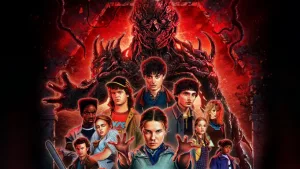
So the big question is simple: did it work?
This Stranger Things Season 5 review with special guest Rik Carranza takes a clear-eyed look at what the final season gets right, where it stumbles, and whether it ultimately earns its place in the show’s legacy.
A Season Built on Payoff, Not Mystery
Unlike earlier seasons, Stranger Things Season 5 is not interested in slow-burn mystery. There’s no question about what the Upside Down is, who the villain is, or what’s at stake. Vecna is fully established, Hawkins is broken, and the characters are living with the consequences of everything that’s come before.
This makes Season 5 feel more like a direct continuation of Season 4’s finale than a standalone chapter. For some viewers, that’s a strength — the story moves quickly, the tone is urgent, and the stakes are clear. For others, it removes some of the intrigue that made the early seasons so compelling.
The upside: the show knows exactly what it’s doing.
The downside: there’s very little room to breathe.
Character Arcs: Strong Moments, Uneven Focus
One of the highlights of this Stranger Things Season 5 review is the cast’s continued commitment. Even when the writing falters, the performances remain strong across the board.
-
Eleven continues to carry the emotional core of the show, though her arc feels more about resolution than growth.
-
Hopper and Joyce finally get their emotional payoff, and for many viewers, Joyce’s role in the climax feels well-earned.
-
Dustin once again proves to be one of the show’s most consistent and emotionally grounded characters

-
Steve, Nancy, and Jonathan suffer the most from overcrowding — too many characters, not enough narrative space.