
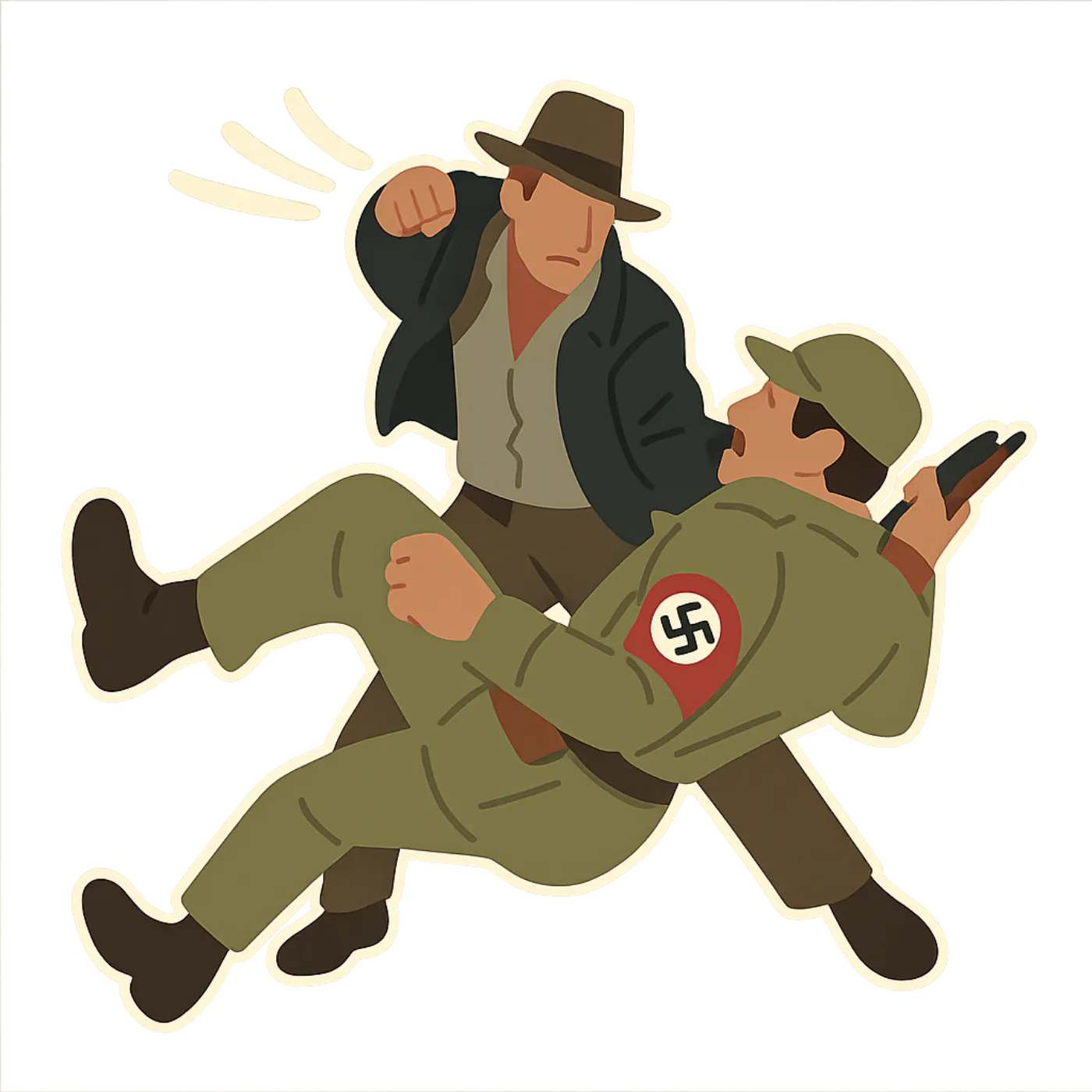
The phrase “Always Punch Nazis” has become a cultural lightning rod — provocative, memorable, and instantly recognisable. But behind the slogan lies a deeper story about art, politics, and the responsibility creators feel when the world tilts in dangerous directions. In a recent OH!CAST interview, host Cal MacDonald sat down with comic creator and publisher Ben Ferrari to explore the origins of the Always Punch Nazis anthology, the political firestorm it sparked, and why the project still matters.
This post breaks down the key themes from that conversation, offering a deeper look at how comics can confront extremism, challenge complacency, and push back against hate.
Where “Always Punch Nazis” Began
Ferrari traces the origins of the anthology back to Charlottesville in 2016, when white supremacists marched openly with torches and extremist slogans. The violence that followed — including the killing of Heather Heyer — pushed Ferrari and collaborator Silas Dixon to respond through the medium they knew best: comics.
The initial idea was simple but urgent: create an anti‑racism anthology that confronted the resurgence of extremist ideology. Ferrari insisted on the title “Always Punch Nazis” — not as a literal call to violence, but as a symbolic stance against hate, bigotry, and authoritarianism.
Over four years, the project grew into three full volumes, eventually collected into a hardcover edition. Each volume featured multiple creators, genres, and artistic styles, all united by a single message: fascism must be challenged, not ignored.
Comics as Resistance: Why the Medium Matters
Ferrari’s career began at Image Comics in the 1990s, where he absorbed the ethos of creator‑owned storytelling. That independent spirit shaped his later work — including Always Punch Nazis — by giving him the confidence to build projects outside corporate boundaries.
In the interview, Ferrari explains that comics have always been political, whether people acknowledge it or not. From Captain America punching Hitler on the cover of his very first issue to the X‑Men’s allegories about marginalisation, the medium has long explored themes of justice, oppression, and resistance.
The anthology embraced that tradition, using satire, sci‑fi, horror, historical fiction, and even werewolf stories to explore the many faces of fascism and the many ways communities can push back.
The Kickstarter Controversy That Changed the Platform
One of the most dramatic parts of Ferrari’s story is the Kickstarter battle. After Breitbart published an article accusing the project of violating Kickstarter’s rules against promoting violence, the platform’s management considered removing the campaign.
What followed was a two‑year internal struggle between Kickstarter leadership and its rank‑and‑file employees. Ferrari later learned that his anthology became the catalyst for the formation of Kickstarter United, the company’s employee union.
The book stayed on the platform. People lost jobs. Careers shifted. And a major tech company unionised — all sparked by a comic anthology with a provocative title.
Ferrari calls it one of the most significant outcomes of his career.
The Emotional Cost of Political Art
Ferrari is candid about the toll the project took on him. Creating politically charged work meant constant arguments, backlash from strangers, tension with friends, and the emotional weight of confronting hate daily.
He describes the process as exhausting — necessary, but draining. After completing the hardcover collection, he stepped back from political comics to focus on adventure stories like The Carriers and Canaan the Marauder.
His takeaway is clear: political art matters, but it comes with a price.
“Keep Politics Out of Comics”? Not Possible.
When asked about the common refrain to “keep politics out of comics,” Ferrari doesn’t soften his stance. Art reflects the creator. Stories reflect society. Politics is woven into the fabric of narrative, whether subtle or explicit.
If someone objects to an anti‑Nazi comic, he says, that tells you everything you need to know.
Why “Always Punch Nazis” Still Resonates
The keyphrase “Always Punch Nazis” endures because it captures a moral stance in five words. It’s not about literal violence — it’s about refusing to normalise hate. Ferrari’s anthology stands as a reminder that comics can be a tool for resistance, reflection, and cultural pushback.
Check out our interview with fellow comic creator Tanya Roberts for more behind‑the‑scenes insights into indie comics.