
Introduction
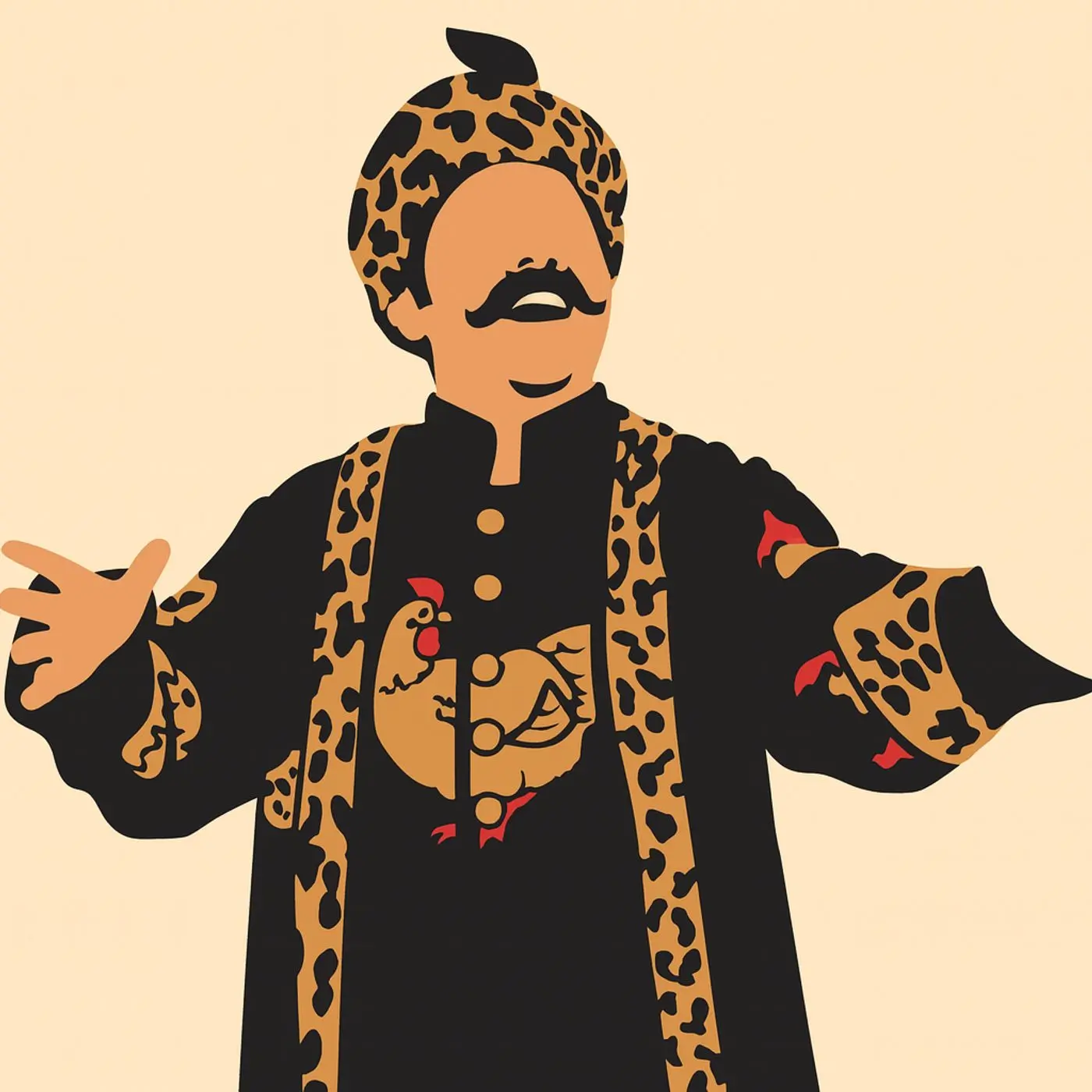
Netflix 1670 has quickly become one of the most surprising Polish comedies to reach global audiences. In this OH!CAST episode, host Cal MacDonald sits down with producer Ivo Krankowski to discuss how Netflix 1670 blends satire, history, and humor while thriving on the platform.
From VHS Tapes to Netflix Originals
Krankowski’s journey from amateur VHS filmmaking to producing the show highlights the evolution of Polish cinema. During the pandemic, he reconnected with writer Jakub Różywó, whose pilot script became the foundation of the series. Reading it made him laugh from the first line, convincing him the project had the potential to break new ground.
Creative Freedom with Netflix
One of the most striking points in the interview was Krankowski’s praise for Netflix’s approach to local productions. Rather than imposing rigid creative control, Netflix trusted the Polish team to shape the comedy authentically. With executive producer Kuba Razowski championing the project internally, the show was eventually greenlit after two years of pitching.
Costumes, Sets, and Folk Music
The eclectic costume design became a standout feature. Costume designer Katarzyna Lewińska blended historical references with modern touches, while composer Jerzy Rogiewicz created a folk‑inspired score. The production team even built a full 17th‑century village with local artisans, adding authenticity to the world of the series.
Humor Rooted in History and Satire
At its core, Netflix 1670 is a satire of Polish society, past and present. By focusing on the Polish‑Lithuanian Commonwealth, the show highlights parallels between the nobility of the 17th century and modern politics. Krankowski described the production as a “love letter to Poland,” celebrating cultural beauty while poking fun at national quirks.
Casting the Perfect Lead
Bartłomiej “Bartek” Topa’s performance as Jan Paweł anchors the comedy. Though the character is deeply flawed, Topa’s warmth makes him strangely endearing. Krankowski noted that his personality off‑screen was crucial in keeping the production collaborative and enjoyable. Supporting actors like Kasia Hermann and Dobromir Dymecki added depth to the ensemble, ensuring every scene had energy and authenticity.
Why Netflix 1670 Resonates
The series arrived at a moment when Polish audiences were re‑examining their history, particularly the overlooked stories of peasants. By combining revisionist history with sharp comedy, Netflix 1670 struck a chord across generations. Politicians quoted it, critics praised it, and fans embraced its mix of satire and celebration.
Conclusion
This OH!CAST episode offers a rare behind‑the‑scenes look at Netflix 1670, highlighting how producer Ivo Krankowski and his team brought a uniquely Polish story to life. From grassroots filmmaking to Netflix’s global platform, Netflix 1670 is more than just a comedy—it’s a cultural mirror, a celebration of Polish heritage, and proof that humor can transcend borders when it stays true to its roots.
Chapters
00:00 Introduction to the Guests
01:33 Iwo Kankowski’s Journey into Filmmaking
03:12 The Birth of 1670
06:18 Netflix’s Support and Creative Freedom
09:07 The Unique Aesthetic of 1670
10:25 Balancing Humor and Historical Context
14:10 Social Commentary Through Comedy
17:30 Celebrating Polish Culture
21:34 Translating Humor Across Languages
23:06 Casting the Lead Role
26:22 Character Development and Audience Connection
28:23 Favorite Characters and Cameos
31:14 1670’s Place in Polish Cinema
35:14 Challenges of Historical Recreation
37:06 Fantasy Elements in Season Two
39:26 The Origin of the Hat God
41:12 Balancing Creativity and Business in Production
43:03 Audience Reactions and Surprises from Season 2
46:33 Character Development and Audience Connection
47:19 Personal Reflections on Career Impact
48:39 Quickfire Round: Fun and Silly Questions
55:18 Looking Ahead: Season 3 Insights
TRANSCRIPT
Cal MacDonald (00:01.185)
Good evening everyone and welcome to Ohcast, your island gateway to all things geek. I’m your host Cal MacDonald and with me tonight, Two Ghosts. First time they’ve appeared both together on the same show. Welcome back. It feels like it was just 10 minutes ago I spoke to you, how are you doing?
Fañch (00:20.307)
I’m doing alright here, yourself.
Cal MacDonald (00:22.973)
doing grand and welcome back on Elena. It’s great to see you again.
Alena Bihan-Gallic (00:27.816)
Thanks, I’m happy to be here.
Cal MacDonald (00:31.011)
Right, and tonight is quite interesting. It’s a show that I was introduced to thanks to my lovely girlfriend. And we managed to track this guy down and he’s here tonight. And it’s a show that’s also still on the air. So this is all kinds of awesome to have him on. Iwo Kankowski, believe, I’m doing my pronunciation, and apologies to our Polish audience. The pronunciations of your names are going to be horrific tonight. But welcome Iwo Kankowski, creative producer of the hit Netflix show 1670.
How are you doing tonight?
Ivo (01:02.198)
I’m going, I’m doing great and you’re doing great. Thank you so much for having me. Hi everyone.
Cal MacDonald (01:07.779)
So I think, like with all these things, just can you give us a little background about yourself, how you got into the production game where you always wanted to get into film and creative arts?
Ivo (01:21.016)
Yes, I have to say I’ve been a filmmaker ever since I got my first video camera at home when I was a 10 year old boy and I was just fascinated with this medium and I then had a film group in high school and we were making lots of amateur, independent, silly films.
But the beauty of the early 2000s was that there were many independent, we called them off cinema film festivals, which would have, which would take place in real cinemas and they would have real renowned filmmakers in the jury. So everyone could send ship in their VHS tape and later DVD, which was really high tech with the films and
If selected, you had a chance to show your silly films to an audience in the cinema and have them judged by actual filmmakers. So after years, I have to say this was my first and really real film school. This is how I learned the digital filmmaking back in the early 2000s. And that’s what led me to…
my relationship with professional filmmakers and later into the film industry in Poland.
Cal MacDonald (02:52.295)
Okay, now leading up to this, it’s quite an interesting show. It’s a hit show in that it’s getting some exposure outside of Poland, which is quite rare for a lot of Polish media. So how did you get involved in this? Were you there from, I think it’s Jakub who was the writer, were you with him from the start with us?
Ivo (03:12.59)
That’s right. It was early 2020, the first wave of the pandemic. I was already after my film studies in London, but it was the pandemic, so filmmakers obviously didn’t have what to do. staying at home…
receiving social care in London, I was wondering who’s having a good time during the pandemic because someone probably is having a better time at least when it comes to creatives. And I think it was quite obvious that the writers must have a good time because when the world stops, it actually takes off a little bit of pressure. You’re not
constantly going, my goodness, everyone is filming, they’re filming, they’re writing their third script. No, nobody’s filming, nothing’s happening. So you cannot compare yourself to others. And this is where the pressure goes down. And so this is when it’s great to write. And that’s when I actually started writing more myself. And then I thought about my good friend Jakub Różywó.
whom I’ve known already at the time for some time because we once tried to do a late-night talk show in Poland, like a real one, inspired by the likes of Letterman, Conan O’Brien, etc. And he was one of the writers on our writing team and I remembered he was one of the funniest and…
I just loved his sense of humor. We later collaborated on some commercials I directed and he wrote, because I always liked humor in commercial and advertisement. And he already had written a sitcom and first feature film. He co-wrote a feature film at the time. And so I thought, I wonder how he’s doing. I called him and…
Ivo (05:20.898)
He did mention he had some scripts in his drawers. I said, send them over. And he sent me three screenplays. One of them was the pilot of 1670. And when I read it, I just laughed from the first sentence and kept laughing all the way. And I was just so shocked that this was happening that I immediately…
wrote an email to my friend who might actually be watching right now and I said listen check this out I think I found some gold and he confirmed that he loved it and then I shared it with my other friend who happens to be one of the leading producers of the Young Generation in Poland Jan Kwieciński
from Axon Studio because I knew we had to have a big fish for such a big project. It was nonsense. It was a period piece comedy. There is no way to do it. But Jan already had a relationship with Netflix. He’s done a sexify for them and a horror film. And so we started sort of talking to various broadcasters.
Cal MacDonald (06:29.026)
you
Cal MacDonald (06:45.612)
Okay, and.
Ivo (06:45.89)
But it took two years to get this project greenlit. So we kind of went all over the place and many networks didn’t understand or thought they loved it, but then they didn’t really know what to do with it.
Cal MacDonald (07:00.854)
Yeah. So that’s obviously it’s something Farnesh was bringing up in the chat we had before we came on about Netflix and how they are encouraging foreign language. How much freedom do Netflix, do they give you a lot of freedom when you make this? How supportive have they been to your team?
Ivo (07:21.294)
Yeah, they’re incredible. think they’re the first global streamer who figured out that to have a local success, you have to trust your local producers. so we have an executive producer from Netflix who’s our peer, Kuba Razowski in Poland. He’s produced movies and series before. it was only after he…
Fell in love with the script as well and and he started building a group of support within Netflix That we were greenlit for this And along the process It’s it’s really something special. I know that if we were if we’d be making this show in England or in the US it would probably be many more executives than just one that’s one and two
Everything is really done in a dialogue, in a way of comments and suggestions and not orders. And this is really a place which allows us to invite all the fantastic talent and coworkers that we invited through this show, all the heads of department, the costumes, the set design.
cinematography, make-up, everyone is invited to just do their best and come up with crazy ideas. And so they’re being fed with the incredible ideas by our directors, Maciej Buchwald, Kordjian Congela and our cinematographer Nils Kronen. And they respond with their creativity, all the heads of department and their teams.
because they are encouraged by us, because we know that our passion and crazy ideas are usually met with just happiness, you know, at Netflix. And if we can do something better, we’re going to be maybe hinted at that and we’re going to try to get there to make it better. But all in all, this is an incredibly fruitful and happy place for us to make this show.
Cal MacDonald (09:47.586)
found Chad Alena I’ll bring you guys one of you guys in there
Alena Bihan-Gallic (09:53.191)
Yes, well, I’m glad to hear that there was so much space provided to the creative cooperation. And I have to say as a viewer, it’s really, now that I know this background, it’s really obvious. Because just there are like so many elements that I didn’t expect. And then
at the same time, they fit in very well. And for example, one thing I noticed and I kept noticing throughout is the costume design. Because it’s both, well, still have this like historically accurate, which you wouldn’t even want because it wouldn’t like match the show. But it both reflects that period, but also has like a lot of
new modern elements. And so I just wanted to ask what were the decisions behind that? that aspect alone, I feel is like a good, know, it’s like reflects the whole eclectic approach of the show.
Ivo (11:14.958)
Thanks, Elina. That’s really nice to hear and it’s a great point you’re bringing. Because from the beginning, we had this discussion, what is allowed? What is our direction? Are we trying to be very accurate and immerse ourselves in crazy research? The research part, yes, of course, you need to do that. But…
Most importantly, we were saying what could have been possible, not what happened, but what’s possible, believable in a way, but at the same time fun and crazy. And additionally, we have an easier way to fantasize in many fields because there aren’t that many
visual records about the peasant life of the 17th century, for instance, right? There’s very, very, very few actual imagery. The paintings that we know of the old peasant life of the villages really is 19th century, maybe 18th century painting. So we have to take from various
sources. There aren’t that many from that specific era and therefore this is when imagination and fantasy kicks in and that’s why we can have so much fun working on the show.
Ivo (12:57.966)
I see a question from my friend. I don’t know, should I answer it now? Hi Tadek. Happy year watching and listening. Why this project felt different and interesting compared to the other screenplays? Well, why? That’s because I…
Fañch (12:58.165)
See a question.
Cal MacDonald (13:01.154)
Yeah, you can, and you can, that way you get to read the name and not us.
Ivo (13:26.336)
laughed immediately and comedy writing is very difficult and there just aren’t that many things that on paper make me laugh that hard. And I know that that was the case for many of us. The costume designer Katarzyna Lewińska always says that she was just like crying when she was reading it out loud for the first time.
Before I mentioned Kuba Razovsky from Netflix as well. He always says that the best quality of it was that it was funny from the get-go. And with humor it’s hard to discuss. It’s a chemical reaction. We all have our preferences. Some of us prefer slapstick and silly things and some of us intellectual and word humor, language humor.
And I feel that this script had a perfect balance of all these types of humor. And that’s what I like in comedy. When there is a little bit of everything. And that’s what I found in the pilot of 1670 when I read it.
Cal MacDonald (14:45.023)
Vaunchy, you wanted to come in there.
Fañch (14:45.813)
Hi. Yeah, following up a bit on that, the humors, the specificity of the humor also and the historical aspect. One thing that I find quite interesting is that you will see there is a choice of this time period, Polish-Lithuanian Commonwealth and this era that is often seen as one of great success politically for Poland and Lithuania. And at the same time, you have this very contemporary
social commentary in it. And the jokes rely a lot on obviously commenting on our own time period. How, and maybe it echoes with Polish viewers in a very specific way. How does that specific period of the late 17th century allow you to make these commentaries nowadays?
Ivo (15:38.739)
You’re actually touching on something that I maybe should have add to the previous question about what exactly really attracted me to this piece of writing. And that’s exactly the aspect of touching on the Polish traits that I always thought were quite worth making fun of.
And these Sarmatians, these noble people who were ruling the country at the time, obviously have a lot of parallels with our politicians and us in general now. And so I immediately felt that there is a possibility of building a mirror in front of ourselves and our society, but through the lens of 17th century. Now, why is 17th century so exciting specifically for Poland?
We had a log line, which in the course of our working on the show we dropped, but I thought was really great to speak about our show. Every episode started with these two sentences. Poland in the 16th century was one of the biggest empires in Europe. Poland in the 18th century disappeared from the map. And in between three dots, this is where our show takes us.
Our show takes us exactly into the moment between when we were an empire and between we disappeared because of the partitions and because we, in many ways, because of the behavior of the nobility and of the mistreatment of the peasants, that was one of the reasons, but one of the big reasons why
Poland couldn’t in the end defend itself and have to surrender to the other forces. And I think this kind of find-a-siecle feeling is just always exciting because it’s a background that creates automatically a lot of tension and allows you to automatically see the parallels between certain behaviors than…
Ivo (18:04.882)
and behaviors now. So that aspect was specifically fascinating and I think has been felt and understood by the polls. This is what we can now say knowing how the first season resonated and entered the language of the people was
quoted by politicians, but was quoted and reviewed by all sides of the political scene. And that’s another important aspect of why I think this show speaks to people so well, is because we never wanted to criticize anyone sort of by name specifically, but
you know, touch on the universal human condition. And this really allows us to make fun of everyone and everything on all sides and use some common sense. Of course, we all have in the team our political views, which I would very broadly, generally speaking, call humanistic towards the progressive side. But we make sure that everyone can feel
Everyone can laugh and have fun with us in our show.
Fañch (19:37.679)
I think it’s… yeah, I was just following up quickly on that. One thing that as a foreigner who knows very little of Poland, one thing I find very interesting in the writing and the aesthetic of the show is that it’s this constant self-directed humor making fun of Polish traits and Polish attitudes and aspects of Polishness at the same time as it seems to me to be a celebration.
Cal MacDonald (19:38.092)
Okay, and just it, sorry, got carried on for while.
Fañch (20:06.823)
of Polishness with amazing choice of folk music, very beautiful songs, the costumes Alena was mentioning, the costumes, some of which are absolutely gorgeous. So it seems to be this balance, you were talking about balance yourself in the writing between making fun, poles making fun of poles, and at the same time, showing a certain beauty of the culture and obviously in the language and the jokes and the plays on words as well. So it’s this kind of in-betweenness celebrating and mocking at the same time.
Ivo (20:38.84)
Thank you for picking that, Founch. And this is exactly what we feel. We always say that this is our love letter to Poland. As much as harsh it is, we actually all really love Poland and we just love what is beautiful about it. And like with every country, there are things that we are proud of and things that we are ashamed of. And obviously we try to touch on both.
But the aesthetics of the time is where our love letter really is. And you’re mentioning the music. have this incredible composer, Jerzy Rogiewicz, who makes an original score, which we all love. we do know that audiences particularly adore all the dancing folk scenes in the show.
and the costumes and the set design. Of course, this is where we are inspired by, you know, the most beautiful materials and colors and paintings. And when it comes to set design, we have these incredible local artisans that we engage in working. You know, we’ve extended an actual old village called Busova in the
Southern Eastern region of Podkarpacie, which is about a four hour drive Southeast from Warsaw. It’s a ethnographic park, as we call them, that had some huts. Obviously they’re mostly from the 18th century, but we just loved how they were maintained and that they were by a forest and by a lake. And we were also welcomed by the locals.
so beautifully. And so this is where we decided to expand and create an actual village from the 17th century. And we built it using the actual techniques used at the time with the actual lumberjack work and all the materials used to create this. was all real. And it really amazes me even though we are
Ivo (23:03.882)
about to finish filming season three right now. I am still every time and all when I walk on the set, either on the soundstage for some interiors or into some other locations that I just realized that I maybe shouldn’t mention directly, but especially the village of Adamczycha is a place where we created a family with the locals. have extras who are locals. We have a lot of artisans that are from there and builders.
And we’ve been there already three times in a row, three years in a row, and we feel like a family and we just all love each other’s work.
Cal MacDonald (23:44.552)
Okay and you can see we’ve had another question come in. I know this is this is my girlfriend Gosha so no worries with the name here.
Ivo (23:47.02)
IS.
Thank you for inviting, thank you for bringing 1670 to Cal’s world. I really appreciate that and thank you for pretty much being the reason why we can all meet today. So you’re asking whether we were worried that the humor would not translate well into other languages.
Actually, no, we were not. And that’s a great question. Thank you. Because that’s another thing that Netflix really understands well. that is that comedies are not meant to travel internationally. Comedies to be successful locally should be as local and as rooted in locality as possible. And they’ve been telling it, telling that to us.
from the beginning. Don’t think about the international audience. We have shows that are meant to be watched by everyone around the world. We have Stranger Things, we have Wednesday. You will never win with those shows and that’s fine. Just concentrate on doing something that is deeply yours and deeply for the local market. And this is a fantastic way of looking at it. And so…
That’s how we work. we never changed anything to make it more international. Maybe there was one or two jokes that if we happen to think that it’s still a great joke, but maybe it can be understood slightly better. Maybe we did it twice, but this is completely not our agenda and it’s never been an issue.
Cal MacDonald (25:41.666)
Well, I wanted to get onto all things. I mean, the writing up, but it’s the casting. And of course it all hinges on one guy, the John Paul. Am I saying the name Bartolomew?
Ivo (25:56.152)
Bartłomiej.
Cal MacDonald (25:57.335)
But like his performance is just, was he your number one choice from the start? Is that who you envisioned? And if I’m right, my girlfriend says he’s not very well known for just playing straight out comedic roles. So like, how did this all come about? Like, were you amazed when he said yes to it? And…
Ivo (26:18.412)
Yes, he is our treasure. He’s our absolute treasure. We love him. It’s so wonderful to work with Bartek. We can use the shorter version of his name, Bartek, but his full name is Bartwomiej. He’s a fantastic person and I say it because for a lead, it’s so crucial to be a good person.
Cal MacDonald (26:30.027)
Okay, cool.
Ivo (26:46.316)
because it all emanates again down to all of us and the cast and crew. And his character is not, you know, the nicest. So if he would choose to be a method actor, he would be a prick. He would be terrible to us. I mean, it would have been a nightmare. So I’m so thankful he didn’t choose method acting working on this role. He’s just the sweetest.
Cal MacDonald (26:58.21)
Yeah.
Ivo (27:15.866)
nicest guy. We sometimes laugh that he’s really an actor who’s a non-actor in the sense that, you know, his ego is in the right place and he doesn’t talk too much about himself. But yes, Bartek and Kasia Hermann playing Zofia, his wife, and Dobromir Dymetsky playing Bogdan, these were the names that…
were very quickly brought in by Maciej Buchwald, our formatting director, and we immediately felt the same. I worked with Bartwami many years ago on my short film. Actually a short film that Tadek, who was asking the question at the beginning, he was the cinematographer on the film. And Bartek agreed many years ago to be on our film
He did it for free. He did it as a kind gesture to his fellow acting colleague who had a part in our show. And it was at a moment when he was already on every billboard in Poland because he did this famous drama film, Drogówka, about street police. And he was all over the place. And people know him very well in Poland from a soap opera.
or from a daily show. He had a comedic part there, not straight up classic comedic, but he had a comedic edge to it. And that’s where everyone knows him from. So he has actually this long career of really step-by-step hardworking. And this also feels fantastic that this is now his big role.
Cal MacDonald (29:09.28)
Yeah, because I’ve got to say it’s a testament to him. The character of John Paul, he is awful in every way, but somehow you end up wanting him to succeed and do better. that’s, you know, that’s, performance is so good that you do end up feeling something for, despite him being a self-centered dick a lot of the time.
Ivo (29:22.264)
Thank you.
Ivo (29:30.636)
Yeah, this was also our main goal from the very beginning, how to make sure that people will want to spend time with him. And he knew it also from the beginning. And maybe that’s why it’s so crucial that Bartek is such a good, funny and warm person in real life. Because in the end, he’s human, our John Paul.
He loves his family, that’s something that everyone can relate to. He is just unaware of how stupid he is. And obviously that also sometimes, you know, makes it slightly less horrible. Because when someone is just like so terribly unaware, unless someone really tries to explain that to him…
Or unless they somehow have the capacity to understand, he doesn’t have the capacity. But we can sort of hope that if he had the capacity to understand, then someone would have told him and maybe he could change. But obviously for now, I don’t think it’s possible. We also make him sort of kidnapped by the crazy times.
Cal MacDonald (30:45.235)
Owen?
Ivo (30:53.312)
the crazy baroque almost medieval times. And that’s obviously why we can accept many more behaviors than we would these days is because we somehow, there’s this time sort of that has passed and we know that on many, levels, like life was really hell on earth back in the days.
Cal MacDonald (31:20.502)
Yeah. Bounce, Alena.
Alena Bihan-Gallic (31:28.359)
Sorry, just fighting with my mic. Yeah, well, I just wanted to ask, you know, with regards to the other characters that are also just like really make you want to like watch every scene of the show. Do you have a favorite one? And if you had to place yourself as a character in 1670, which would your character be like?
Ivo (31:59.919)
So, since I am also a character on 1670, I will say that I would place myself as Yvonne. Because I don’t know if you’re aware, but I have a cameo in episode five, I think, of the first season. I’m in drag and I’m eating mushrooms. then Bok then takes them from me. Right, I’m part of the theater troupe.
Alena Bihan-Gallic (32:20.502)
Ivo (32:30.1)
So, you know, I don’t have to imagine myself. I know I have a part in the show, but I love so many smaller parts. I’m a big fan of the comedic force and not only comedic, in season two she had an incredible, I think, little arc. It’s Regina, the female peasant who…
falls in love with Maciej and is sure that she’s ordered by Zofia to follow him and she’s sure that he wants to run away with her and then he tells her that it’s not her. And I think it’s a very beautiful, very moving scene. And I think our idea for Regina to always be saying something that she overheard and those are like these wisdoms and sayings that are often coming from contemporary world.
like the corporate or, you know, the world of making yourself better. I forgot the right name now, but I think it’s a very funny character. think Wojciech, the guy who constantly wants to kill a noble person with a knife. He’s also a fantastic character and I can only just promise that he’s going to develop.
in the future. And obviously the priest Jakub, none of us really saw this coming. Like what would happen with this character? Like people are tattooing the image of Jakub onto themselves. He’s become a celebrity almost overnight in Poland after season one premiered. He’s just so funny.
One of the few characters, the priest, that we allowed to really play stronger in a comedic way. Because for the rest of the show, we always said, let’s be as serious as possible. Let’s play as realistic, as natural as possible. Let’s not do what has been a tradition in Poland in the last 20 and 30 years in comedies. And that’s like this. I’m playing a comedy. I’m now going to be funny, you know?
Ivo (34:53.502)
And that just hardly ever is funny. And so we always encouraged everyone to be as serious and as realistic as possible, but priest Jacob like found a way to sort of, you know, go a little bit over the top, but it works and we love it and we love him.
Cal MacDonald (35:12.546)
Fawne, Shadigywr, wanting to come in there.
Fañch (35:15.093)
I am not specifically about that point, but you made me think while you were talking a bit about the characters, the writing, all these sort of topics that go back and forth and makes me think about, you know, Polish cinemas and TVs, well established, it’s quite strong and old, even though here we don’t always access it as readily as obviously you would in Poland. How does 1670 fit within
what has been developed historically in Poland. And is it offering specific opportunities to the youngest cohort of filmmakers? Or is it actually fitting in a broader picture of Polish cinema as it stands today historically?
Ivo (36:00.14)
Mmm.
I think we had a period of adapting Polish literary hits from the past. And we had it in the 20th century. Only recently we are starting revisiting some famous novels. But the last 20, 30 years, we did not have much historical cinema. A few, but it was always…
with this very nationalist syndrome to it, usually. We have very little films or series or productions that would be something that a younger generation could relate or something that we could actually be proud of, both on an artistic level and on the historical level of representation. But what we did hit is this
moment of revisionism in Polish history in the broader pop culture discussion because we followed these couple books that came out which were on this period approximately trying to bring back justice to the people’s history of Poland, the peasants
history of Poland, obviously they were never properly given a voice and a discussion has started. So we sort of came in the right moment where people were already getting to know the stories of their grandparents, great great great great, know, ancestors, you know, we’ve been studying our ancestry in Poland and finally understanding that
Ivo (37:55.693)
You know, 80 % of us in Poland really come from the peasants, which were really often treated like slaves in Poland and that the nobility was a small fraction. with that already present in Poland, our show became this sort of pop culture element, maybe that was missing, but that like hit big, hit precise and hit big. And that’s why it resonated so much.
There’s been a movement, because you asked about other filmmakers, we’ve had a fantastic film about Kosciuszko recently by a great Polish director, Pawel Maszlona, and, you know, Kosciuszko also fought in the American War of Independence and then he came back to Poland and…
This was a fresh new take and a brave way of tackling history. And I would hope that also showing the beauty and the possibilities that period pieces give to filmmakers, maybe some of us will become more adventurous and brave in wanting to tell these stories, these historical stories, but at the same time, you know who needs to be more brave and…
open to that, the broadcasters. So they need to believe that it’s worth spending the money and that there’s going to be audience. I think they already know that there is a big audience in Poland for historical cinema and series. And now it’s a matter of allowing these projects, which I’m sure are being written and developed right now in Poland, to be made. My friend Julia is asking a question.
What were the biggest practical challenges of recreating 17th century in Poland? Well, from obviously the building of the village, which we did, which I already mentioned, inventing the creative aspects of the world, using very little imagery available. you know, really creating from scratch a lot of things, a lot of…
Ivo (40:18.254)
patterns and colors are really an imagination of our designers. Biggest practical challenges. I would say definitely those that I mentioned. It’s just like creating this world. Because then it’s just
fun. It’s a lot of work starting from developing the screenplay and then adding to the screenplay by our directors and cinematographer and First AD and then just executing it. And as with every big production, it’s always a challenge. But I think, you know, when you work with the best and the
crew and the team that loves their work, then I think it’s always easier. I don’t know if I am answering this question well, because I felt like I was already speaking about these things for quite some time. But if I think of something, then I will add along the way.
Cal MacDonald (41:32.802)
My question here is a bit two-fold. I noticed in season two you started to introduce more fantasy elements. mean was that the plan? And also attached to that the whole Bogdan being possessed by Satan. Is this something you can explain to us how this has come about or is that for season three we get the revelation there what’s going on?
Ivo (41:58.447)
I’m obviously not gonna say anything about season three, I can try to interpret myself what has happened in season one and two. So Bogdan assisted on an exorcism and clearly got the demon or something into him after it left the poor girl in season one. And…
Cal MacDonald (42:02.581)
All right.
Yeah.
Cal MacDonald (42:17.451)
Okay.
Ivo (42:27.454)
So we knew he has something in him and then in season 2 we Show that his eyes go blue very often when he gets angry, you know as as we can imagine that demons are not the happiest and nicest creatures and so when he gets angry it means that something is buzzing in him and obviously one of the famous moments when people
often get angry is when they overdose on vodka. And this is what happens in episode 7 at the Stag party in Krakow. And yeah, so the Satan is there. He’s worried to touch the act of the Christianing of Poland that Andrzej has.
So that’s again the Satan reacting badly to that act. And then he gets really, really, really mad. But I don’t know if… I mean, we can speak freely about what happened in season two, right? We assumed that everyone by now saw it. So when Bogdan is hit in the chest, the shot…
by Aniela and we think he died in the last scene almost before credits of the season we see that the famous hat god Kapelusznik as we call him on the sky appears and resurrects a Bogdan from the dead. And so without knowing anything from season three
Cal MacDonald (44:13.685)
Okay.
Ivo (44:21.526)
just by watching season two, how I would interpret it is that Bogdan has been brought back to the living by the god of the hat, but the demon should be, the demon not should be, the demon definitely left him because there’s a cat that meows and the demon moves from Bogdan into the cat actually. So the cat now has a problem, but Bogdan should be back considering how season two ends.
Cal MacDonald (44:39.49)
That’s it.
Cal MacDonald (44:52.414)
Okay, found channel.
Alena Bihan-Gallic (44:53.073)
Can I just ask a quick question? The Hat God, was that like a spontaneous joke that then like later developed into a whole storyline or what was the origin story there?
Cal MacDonald (44:59.255)
No problem.
Ivo (45:11.342)
The guy…
But I think that since it was already invented in this hilarious episode when they are writing down all the beliefs in the village and there is a non-believer who admits that he doesn’t believe in any God and it turns out that at the time, you you could have believed in anything and that was better than the non-believing, right? And so when he realizes that they might kill him for being a non-believer,
He quickly picks some things that he sees and so he sees someone in a hat and so he has and so he claims that the president claims that he believes the god of the hat who gives good people potatoes. He invented that on the spot but since such a brilliant god, the head god, why not reuse him when there is an occasion. my friend Eliza.
is writing, ciao Eliza. Hi, how are you balanced? Have you balanced the creative and business sides, especially having a vision for multiple seasons but having to release season one and wait for renewal? That’s question coming from a professional. It’s always a filmmaker’s thing to try to balance.
or a producer’s thing to balance the creative and the business. I’m fortunate enough that I don’t have to think, sort of speak about the business side too much as the creative producer, because that’s mainly done by the main producer, Jan Kwieczynski of Axon Studio. Obviously, I represent Axon Studio with the creators and with Netflix, so I have to make sure everything is delivered.
Ivo (47:39.811)
But we did not know how this story would go. We had certain ideas when we were pitching season one. We had ideas to prove that this was a very full and rich world, which can develop later if we want. But we didn’t have specific ideas and concepts. We knew that John Poles
quest to become the most famous John Pole in the history of Poland was a really big crazy quest, possibly doomed to fail, but definitely allowing the character to go on a much bigger journey that we had planned for season one, right? We knew that one season is definitely not, you know, it might get him slightly closer, but
nowhere near to the actual goal. And so I think this is a crucial thing with every series is to make sure you have a strong core idea, goal for the protagonists, which will allow the creative outcome and production of a future creative continuation of the story, right? So it’s the motor of everything.
is this main arc, main goal. And we made sure it was clear, it was strong, and it could give us more ideas for future seasons.
Fañch (49:20.917)
I was wondering, regarding the production aspect but also the release aspect, was there anything in the reaction to the show that surprised you? You mentioned that it’s got a lot of traction in Poland and some traction internationally. Any surprises came from the release itself?
Ivo (49:45.855)
Probably slightly different between 1 and 2, huge difference how something that is new and unknown is perceived by the public and how Season 2 is perceived by the public. And that’s the most fascinating learning I got from this adventure. A couple of weeks ago when we premiered Season 2 is that we knew we were sort of getting ready for it, but we didn’t really understand the scope of it.
you can never in a way match the success of season one for a very simple reason. That season one we invited many many many many people with us and some of them came on board for reasons that maybe are not necessarily
clear to us or maybe for reasons that were not crucial for us. And so when we decided that season two, we want to make it different than season one. We want to go, as you mentioned, more crazy, more story oriented, allow fantasy in, expand the worlds. We knew that we were embarking on a brave, different path.
which we wanted it to be like that. And so we knew that we would not take every single person with us from season one that was there. But it looks like we invited others. And so in a way, we can say that the audience is growing 1671 because of the marketing efforts by Netflix, which are obviously humongous. It’s unprecedented.
how much promotion our show received and that’s always helpful. And so when the buzz is so big, people get excited and I know that there some people in Poland who are like, fine, I’ll finally watch this 1670 because I also want to be part of it in this discussion. And so that’s why we did have a bigger audience. in a way, the show stops being your show after season one. You are suddenly…
Ivo (52:11.554)
doing something that belongs to everyone else and people have their favorite characters, people have their needs. You asked what surprised me. This is just one thing after season one, which was, I think, the biggest surprise to all of us, is how people resonated with Bogdan. We almost thought that Bogdan, the nationalist guy, is going to be the first one to be killed.
in future stories, because potentially he was the one that would have the least crying after him. But it turned out that people really loved him. And I think the key to why is again, first, the actor interpreting Bogdan is one of the nicest, sweetest, most intelligent actors on earth. And two, we made sure
to make Bogdan a multi-dimensional character and therefore to give this nationalist also certain traits that might redeem him a little bit. And that is of being a lonely guy, a lonely person. suddenly when you can fire up empathy in audiences, these amazing things can happen. And that’s why we decided after the reaction of the crowd, no, we can’t get rid of Bogdan. He’s too good of a character.
multi-layered with a great actor and we have to continue with him. So I think that was the biggest surprise in terms of season one and the reaction to season two as this big learning that this is not only our show now, it’s the people’s show.
Fañch (53:57.381)
So just, know we’re coming up to the end, kind of last maybe short follow up in your own personal career. You’ve been talking about how you’ve been fascinated by cinema in a long time. Stupid question maybe, but there’s going to be a before and after 1670 for yourself.
Cal MacDonald (53:58.751)
Okay, I’m sorry.
Ivo (54:18.808)
Sorry if is there gonna be a
Fañch (54:21.109)
For yourself in your own personal career, there is a before and after 1670 you think.
Ivo (54:30.606)
Sure, yes. I’m also in this moment of life, lots of transitions, many transitions, regarding to age, moment in life, etc. And so I’m pretty sure that this show is one of the biggest ones. And absolutely, I think that in the future I will describe life pre-1670, post-1670, a little bit of like…
pre-era and our era and something like that. By the way, just wanted to praise our prop department. When I said that I had a part on the show, was amongst others telling everyone to eat this supplement from Gura Kalvaria, which if you take, you will not die. So it’s a great medicine. And this is real porcelain. This is the artisan work that I was talking about.
Fañch (54:59.562)
era and our era.
Cal MacDonald (55:01.283)
Thank
Fañch (55:09.109)
I
Fañch (55:19.893)
You
Cal MacDonald (55:22.755)
you
Ivo (55:28.674)
that every single prop is actually made. This is not plastic. And I really love the fact that I can keep some sugar, some white poison in it.
Cal MacDonald (55:42.347)
you
Fañch (55:44.404)
Thank you.
Cal MacDonald (55:48.351)
Okay, we’re coming up on time. the now kind of very customary we do at the end, the quickfire round. Are you ready, Ivo, for some silliness?
Ivo (56:00.472)
Sure.
Cal MacDonald (56:02.04)
So question number one, if John Paul had a TikTok account, what content would he make?
Ivo (56:13.108)
It would be definitely something about him, with him. It would just be him. It would probably, like his face would probably cover up the whole screen. Like he wouldn’t realize that he’s not filling the whole screen with his face.
Cal MacDonald (56:27.565)
So maybe life hacks for nobles or something like that.
Ivo (56:32.15)
Absolutely.
Cal MacDonald (56:33.805)
So number two, which character would be the absolute worst at attending a Zoom meeting?
Ivo (56:40.47)
An absolute
Cal MacDonald (56:41.943)
who would be the worst at attending a Zoom meeting.
Ivo (56:46.374)
yes. The worst at a Zoom meeting? I think Sofia, because she would just not nod a single time. She would give you zero reactions to what you’re saying. Like you are all, Founch and Elina, so graceful. And this is necessary for the speaker to see that someone is actually listening and receiving.
and Zofia would be just like still probably not even present and praying inside.
Cal MacDonald (57:24.173)
So what’s the best use for a potato as a currency, a food or a weapon?
Ivo (57:30.006)
A potato is the best as the currency, of course.
Cal MacDonald (57:34.819)
So next up, if Bajay opened an Etsy store, what would he sell?
Ivo (57:42.753)
Maciej. he would most definitely sell these little creatures that he makes out of… and that’s the word I always miss in English. This… Yeah, yeah, straw. Yeah, yeah, yeah, yeah, yeah. He would definitely sell that.
Fañch (57:57.01)
Strow is…
Alena Bihan-Gallic (57:58.02)
Straw?
Cal MacDonald (58:02.581)
Okay, which character is most likely to secretly spend all their money on Swedish imports?
Ivo (58:10.67)
What character is most likely to spend all his money on Swedish import?
Well, outside of our world, it would be our Swedish cinematographer, Nils Krone, who’s the most wonderful cinematographer on our show, and he’s actually Swedish. And he did not know that we have such a relationship with Swedes, because obviously in Sweden they don’t teach them that they once invaded Poland. But in terms of our characters…
Cal MacDonald (58:32.685)
Alright.
Ivo (58:45.794)
You know, I think Bogdan would. You know why? Because he would think that if he buys all of the Swedish imports, then it means that the Swedes are going to be left with nothing.
Cal MacDonald (58:57.219)
All right, I don’t know if you’d really want to answer this next one. Which character smells the worst?
Well this could end you up in trouble.
Ivo (59:06.476)
Well, you know, in season one it’s again Bogdan and we know it because in season two he’s finally washed and rich.
Cal MacDonald (59:12.01)
All right.
Cal MacDonald (59:18.933)
Okay, if the family had to trade places with a modern celebrity for the day, who would they be?
Ivo (59:26.762)
A modern celebrity who would they invite to their village?
Wow. That’s a good one. Is the current pope a modern celebrity? Because I’m pretty sure they would invite the pope.
Cal MacDonald (59:44.352)
Okay.
Alright, okay, who’s a better leader? John Paul or a hungry goat?
Ivo (59:54.351)
When you are on shrooms, it’s definitely the goat but in reality when you’re sober, it’s always John Paul.
Cal MacDonald (59:56.163)
You
Cal MacDonald (01:00:01.059)
All right.
Fañch (01:00:05.506)
It’s been established that the goat is a sultan.
Cal MacDonald (01:00:06.455)
Okay.
Ivo (01:00:10.412)
Yes, that’s right. That’s right.
Cal MacDonald (01:00:12.739)
Number nine, almost at the end here, which minor character deserves their own spin-off episode?
Ivo (01:00:23.36)
so many, but by popular demand it should be priest Jacob and Bogdan.
Cal MacDonald (01:00:32.681)
see I would go and I’ve forgotten her name the one who’s in charge of the salt empire what’s her name again so if you had a whole about so if you could have like a kind of breaking bad series was no sorry yeah if you get to have that like have our do a drug empire
Ivo (01:00:40.101)
ASTASHA! That’s so good, I love her, I love her.
Ivo (01:00:47.916)
Yes!
Ivo (01:00:51.798)
It’s one of my favorite directors. Thank you so much for bringing her up. The fact that she is a lament woman who always cries and yet she can run a mafia is just fantastic.
Cal MacDonald (01:00:56.246)
Yeah.
Cal MacDonald (01:01:02.947)
And the last question, what would Sophia’s biggest complaint about modern life be?
Ivo (01:01:17.982)
She would literally go crazy in the modern world.
Cal MacDonald (01:01:20.707)
Hahaha
Ivo (01:01:23.81)
but what would be the main?
Cal MacDonald (01:01:25.803)
Yeah, the number one. If she had to complain about one thing.
Ivo (01:01:31.638)
I think the notion of a nudist beach would really kill her.
Cal MacDonald (01:01:35.595)
I don’t know. Given how she behaves in season one, that might be something she might secretly like.
Ivo (01:01:44.045)
Yeah, you’re right. I don’t know all the classics, internet phones. She would definitely despise of that. The lack, the lack of crosses in public spaces, you know, because we’ve spent so much time trying to take crosses down from our communal political spaces and
she would really, really, really be upset with that.
Cal MacDonald (01:02:17.763)
And there’s just one last thing. I’ve been running a poll with our audience tonight and there’s a tie break so you can have a deciding vote on this one. So it’s which two have the best on-screen relationship? So it’s John Paul and Sophia, they got 20%. Angela and Madjai got 40%. Jakub and his schemes got 40 % as well.
Ivo (01:02:26.958)
no! What is it?
Cal MacDonald (01:02:47.639)
Bogdan and Misfortune got 0 % sadly. So it’s either…
Ivo (01:02:51.854)
I cannot, I cannot as a creative producer, I cannot vote. I really can’t. You have to.
Cal MacDonald (01:03:00.25)
Okay, I’ll go to Alena first who do you vote for
Alena Bihan-Gallic (01:03:06.989)
Ooh, okay, I’m not gonna pretend. I’m just kind of like into the typical romance story of the noble lady and the peasants.
Cal MacDonald (01:03:19.799)
Alright, that’s one for Aniel and Maggi and well, Faunce this could decide everything.
Fañch (01:03:25.609)
wow, no pressure. But you know, I think I’d go for that as well. Yeah. No, like I would go for for Anielka and Mathieu as well because they the actors have managed to have that chemistry on screen really nailed. So you really care about what’s happening to them. So, yeah, I cast my vote for them too.
Ivo (01:03:26.606)
That’s amazing.
Cal MacDonald (01:03:28.576)
You
Alena Bihan-Gallic (01:03:30.427)
Yeah, think carefully what you’re gonna say.
Cal MacDonald (01:03:46.829)
Yeah.
Yeah, and also I would, this is just another aside, what I did like in season two, you made that love triangle, but you also did it in a way every single person in the love triangle was sympathetic. No one was really being awful in it. Like you sympathized for everyone, like they all three had genuine feelings in that and no one person was really in the wrong. And I really, it’s not often you get that with a love triangle. So well done on that.
Ivo (01:04:04.142)
Mmm.
Ivo (01:04:16.6)
Thank you and so lovely you touch on that. We’ve heard a lot about people fighting, whether it’s marching or matche. And that’s like the best outcome we could think of. We want all of them, both of them to have their fans. And some people are going to maybe use more brain and some people are going to use a little bit more heart, you know, because that’s a little bit the choice that she has.
Cal MacDonald (01:04:47.735)
And I know we won’t get away unless I just ask, can you tell us anything about season three? And I know what the answer is gonna be already.
Ivo (01:04:55.214)
I can only tell you that we wrap up filming very soon, in a couple of weeks, that we are almost there, that we are now filming the interiors of the main manor, which are on a soundstage in Warsaw, and that we are preparing some fantastic surprises for you. yet again…
I promise that season three is gonna be yet again different from what you’ve seen so far. It doesn’t mean it’s gonna get crazier, it just means it’s gonna be different. It’s gonna have its own stylistic vibe, its humor, and yes, we will have a lot of The Village because everyone loves The Village, but we will also have a little bit…
of some other world that we will expand from that era. And I can only say that.
Cal MacDonald (01:05:56.74)
I just wouldn’t be allowed to get away without at least trying. So thank you very much Evo for coming along. Alain and Fauce if you have any last thoughts.
Alena Bihan-Gallic (01:06:08.807)
Well, thank you so much for talking to us and we functionized, were watching together. We have really enjoyed the show and we are excited that there is another season.
Ivo (01:06:24.034)
Thank you so much. It’s really nice to hear and I’m so glad you’re enjoying it.
Cal MacDonald (01:06:31.347)
there’s one last question which we always have to ask of any guest. Would you ever consider coming up to the Hebrides for a visit?
Ivo (01:06:39.054)
Yes, please. I first need to check exactly where that is, but I will definitely come.
Cal MacDonald (01:06:40.579)
All right.
Cal MacDonald (01:06:45.409)
haha
All right, thank you very much. Well, we’ll see what happens here. So thank you very much for coming along. I hope, yeah.
Ivo (01:06:54.894)
Thank you so much, Kyle, and found Alina. It was such a pleasure.
Fañch (01:06:57.703)
jekuje.
Cal MacDonald (01:06:58.907)
and hopefully we can get you back when season three is done and we can maybe speak on that if you’d be willing to come back.
Ivo (01:07:06.508)
and I’ll bring some friends from the team. I’d love to do that.
Cal MacDonald (01:07:10.793)
yeah, that’d be great. That’d be awesome. We could have some of the career along. And if anyone wants to reach out to you, if they’ve got any further questions or interests, where can they get a hold of you?
Ivo (01:07:20.974)
Absolutely, I’m on Instagram, ivy underscore okay. I think that’s the easiest, best way to get in touch.
Cal MacDonald (01:07:32.834)
Okay and I was going to get ready to say goodbye in Polish but… isn’t it? That works, it? All right, yes. So good night everyone. Thanks for coming along and we’ll see you all very soon. Okay, I’ll just… and if you…
Fañch (01:07:41.801)
Goodbye!
Ivo (01:07:46.978)
Thanks so much.
Bye bye.